
Wildlife never seems to get the attention it deserves, but 2026 will bring many headline-worthy developments for certain imperiled species, including some whales, wolves, and oversized parrots and salamanders.
We’d do well to pay attention to these 20 species (or 21, depending how you count them). The threats and opportunities these animals and plants face could mean the difference between disappearance and survival, but they also illustrate the situations faced by countless other species around the world — including Homo sapiens.
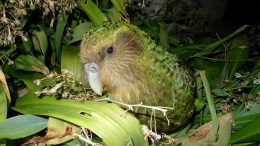
Kākāpō (Strigops habroptilus) — These endearing flightless parrots are about to enjoy what could be their best breeding season since 1977. And they need it: Only 242 of the critically endangered birds remain, on three remote, predator-free islands off the coast of Aotearoa New Zealand. They breed about every 2-4 years, when a native conifer called the rimu tree produces its nutritious fruit. This year 84 kākāpō females could potentially lay eggs, and while not every female is guaranteed to reproduce — nor every egg or chick guaranteed to hatch or survive — 2026 could still be a banner year.
And we won’t need to wait too long for the results: Nesting and hatching season will take place from January to March, and conservationists will monitor the chicks through May. They won’t manage the process as heavily as in past years — the goal is to establish a self-sustaining population that doesn’t need as much human intervention — but I expect plenty of photos of eggs, chicks, and proud kākāpō parents in the months ahead.
View this post on Instagram
North Atlantic right whales (Eubalaena glacialis) — These critically endangered baleen whales are already in their calving season, which will run through mid-April. And as with the kākāpō, every newborn matters.
North Atlantic right whales have had a hard time the past few years, with more than 20% of the population dying after being entangled in fishing gear or struck by boats or ships. Their population fell about 25% from 2010 to 2020 but has been on the upswing since then, rising 7% since the start of this decade to an estimated 384 whales.
The good news: As of this week, conservation teams have already spotted an amazing 15 calves — a great start to the season. But at the same time, a male whale named Division experienced “life-threatening” fishing-line entanglements, with the cords embedded in his jaw and cutting his blowhole. A two-day rescue effort appears to have saved his life — but the crisis reminds us that many threats remain for these struggling whales.
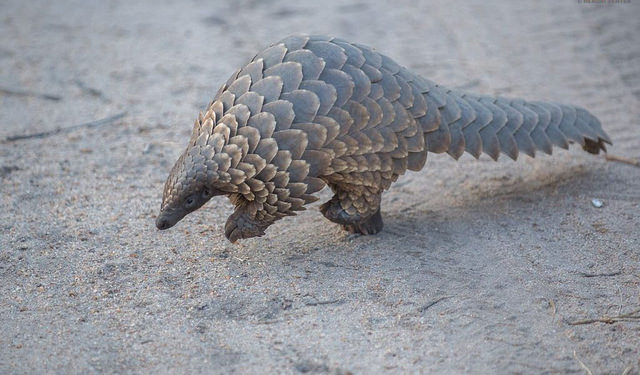
Pangolins — These scaly anteaters from Africa and Asia are among the world’s most-trafficked species, and that’s put them on the fast track to extinction. The U.S. Fish and Wildlife Service has proposed legal protection for seven of the eight (or is that nine?) pangolin species, with a decision due in 2026. The United States hasn’t been directly linked to much pangolin trafficking, but federal protection here would lend support to international efforts.
Unfortunately the Trump administration wants to dismantle or neuter the Endangered Species Act, so the fate of the proposal seems uncertain at this time — a situation that echoes throughout the rest of this list.
Tapanuli orangutan (Pongo tapanuliensis) — This third orangutan species, only described by science in 2017, may have a hard time making it out of this decade. A massive flood this November wiped out somewhere between 6-11% of the species’ population, which before this disaster was estimated at just 800 apes. As Gloria Dickie wrote for The Guardian, Tapanuli orangutans only reproduce every six to nine years, so this mass mortality is a terrible blow. Much of their habitat and food also got washed away, so the survivors will have an especially hard time recovering.
It doesn’t help that gold miners have taken aim at Tapanuli orangutans’ habitat. Not only have roads further carved up the apes’ territory, but the deforestation and land degradation caused by a billion-dollar mining project may have made the recent flood much worse.
View this post on Instagram
White storks (Ciconia ciconia) — These long-legged birds are widespread throughout much of Europe, Asia, and Africa — but not so much in Britain, where the last breeding birds were documented in 1416. The storks were wiped out in the British Isles by habitat loss, overhunting, and persecution. But in 2026 conservationists aim to return the birds to the skies around London for the first time in 600 years in one of the world’s most visible rewilding and reintroduction efforts.
Wolves (Canis lupus) — As usual, there’s a lot going on with this beloved species — so much that we could probably run a whole article on what to watch from and about wolves in 2026. In particular we should pay attention to Republican efforts to delist wolves from the Endangered Species Act; conservationists’ push to restore a national recovery plan; the ongoing reintroduction efforts in Colorado; wolves’ continued expansion in California; and their population growth in Oregon.
Grizzly bears (Ursus arctos horribilis) — We can expect the Trump administration to try to undermine grizzlies’ recovery, despite two years of record-high mortality levels.
Monarch butterflies (Danaus plexippus) — Are monarchs the poster child for insect conservation? They inspire conservation efforts wherever they fly — even though the number of places they land continues to plummet. Unfortunately the Trump administration just announced plans to indefinitely delay decisions to protect these butterflies; meanwhile state and individual conservation efforts have ramped up and science to track the beloved insects has made leaps and bounds. It’s a fair bet that people will keep watching the skies for these beauties as long as they flutter by.
View this post on Instagram
Mountain lions (Puma concolor) — These big cats go by a lot of names, and there are a lot of reasons to watch them in 2026. California may protect them as a threatened species (thanks to a push by our publisher, the Center for Biological Diversity), while construction of the Wallis Annenberg Wildlife Crossing — the world’s largest wildlife bridge, designed in no small part to protect cougars like the beloved (and much-missed) cat known as P-22 — should wrap up this year. Meanwhile the historically persecuted animals continue to expand their range in other states, a sign that it’s hard to keep a good cougar down.
Sansevieria bangalalana — This newly discovered Tanzanian grass species appears on this list not because I expect it to make many (or any) headlines, but as an emblem for all the other species (plant and otherwise) known to exist in single locations that could be wiped out by even one development or disaster. Single-site endemics like this are the faces of the extinction crisis — even though plants don’t have faces.
On that note let’s also pay attention to a rare orchid known as Canelo Hills ladies’ tresses (Spiranthes delitescens). Native to Arizona’s Sky Islands, this species’ remote range has retreated from five known sites to just two — both of which are cattle ranches. As Riley Black detailed in Smithsonian, these plants rely on levels of moisture and a specific fungus species to survive — a reminder that nature often exists in a delicate balance. A test effort to plant 10,000 orchids in sites shown to host the fungi could make interesting headlines in the months to come.
Manatees (Trichechus manatus) — Florida’s iconic manatees have had a rough time lately. The most recent data suggests 625 manatees died in 2025, up slightly from last year though still nowhere near the mass mortality that took place in 2021 and 2022. The “sea cows” face a host of threats — including boat strikes, cold waters, pollution runoff, and a lack of the seagrass they depend upon for food. In the year to come they’ll become one of the species most likely to be hurt by the Trump administration’s planned changes to the Endangered Species Act — something I don’t think Floridians will take lightly.

Eastern hellbenders (Cryptobranchus alleganiensis) — Our final “species to watch” this year is one of my favorites. These massive salamanders rely on clean, cool fresh water that’s in increasingly short supply in this country — so much so that at least 41% of this species’ historical habitats can no longer support them. A decision to protect them under the Endangered Species Act is due in 2026, but as with other animals on this list, the Trump administration looms over that timeline. This time it’s not only the Act’s jeopardy but proposed rollbacks to the Roadless Rule and clean-water protections that are threat multipliers for hellbenders.
But folks increasingly find these amphibians endearing, seeing them as worthy of study and protection and icons of freshwater conservation and even celebrating them in pop culture. I don’t think the public will let hellbenders fade into the night, and any efforts to protect them will benefit countless other species that rely on freshwater systems — including people.
View this post on Instagram
What species will you be watching in the months ahead? Drop us a line anytime.