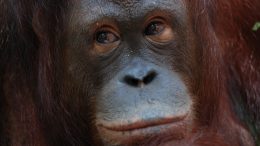
“Orangutan” means person of the forest. As their forest homes disappear, these great, orange apes teeter on the brink of extinction. Despite laws protecting them, baby orangutans are still stolen from their mothers for the illegal pet trade. But rescue, rehabilitation, and reintroduction efforts offer these orphans a second chance at life in the wild.
Species name:
Bornean orangutan (Pongo pygmaeus)
IUCN Red List status:
Description:
An orange-haired great ape, orangutans are the largest arboreal mammals in the world. Mature males develop distinctive cheek pads that help amplify their resonant, long calls that carry across the forest. Young orangutans remain with their mothers for up to eight years, gradually learning essential survival skills before venturing off independently.
Where they’re found:
Historically, orangutans were widespread across Southeast Asia, but today they survive only on the islands of Borneo and Sumatra. They live in diverse tropical forest ecosystems, including peat swamp and dipterocarp forests — areas rich in biodiversity, though increasingly fragmented.
Why they’re at risk:
While habitat destruction remains a major threat, the illegal pet trade is one of the most direct dangers to Bornean orangutans. Areas where orangutans are targeted for the pet trade often overlap with areas of deforestation, as smaller fragments of forest leave them easier to be found. Poachers will kill mother orangutans and take their helpless babies to be sold as pets. Many of these captive animals die before reaching the pet trade due to lack of correct nutrition, illness, or trauma.
Who’s trying to save them:
There are numerous nongovernmental organizations and charities working in the field of orangutan conservation. While there are also some government initiatives aiming to secure lasting protection and reinforce the illegal pet trade laws, challenges often arise from conflicting interests and enforcement difficulties.
View this post on Instagram
There are also rescue centers across Borneo that work tirelessly to locate and confiscate illegally kept orangutans, provide medical care, and rehabilitate orphans. These programs have a “forest school” process, whereby young orangutans are taught the essential climbing, foraging, and survival skills that their mother would have taught them. Human caregivers provide semi-wild environments to mimic natural learning processes until they’re ready for reintroduction back into the wild. As orangutans would naturally stay with their mothers for eight years, this process is slow and resource-intensive, but it’s the only chance they’ll get to return to the wild.
Why I advocate for this species:
I advocate for Bornean orangutans because each individual has an extraordinary capacity for intelligence, curiosity, and resilience. To see an orphaned orangutan progress from a traumatized infant to a confident young ape ready for release is both heartbreaking and inspiring. Their suffering is entirely human-made — but so is their chance for recovery.
What else do we need to understand or do to protect this species?
Orangutans are often called an “umbrella species,” meaning that conserving their forests also protects countless other animals and plants that share their habitat. Long-term survival depends on safeguarding large tracts of forest, while the immediate need is for rescue, rehabilitation, and reintroduction efforts. Law enforcement against wildlife crime must be strengthened, while rehabilitation programs need ongoing support to prepare orphans for release. Public education is equally vital: When people understand that an orangutan is not a pet but a wild, intelligent being, demand for the trade declines.
What you can do to help:
You can contribute by raising awareness of their plight, advocating for sustainable choices such as using only palm oil products that are certified as sustainable, and supporting conservation and rescue charities. Sharing their story, whether online or in person, helps spread understanding and inspire action.
Share your stories: Do you live in or near a threatened habitat or community, or have you worked to study or protect endangered wildlife? You’re invited to share your stories in our ongoing features, Protect This Place and Save This Species.
Previously in The Revelator:
Save This Species: Owston’s Civet