This story was originally published by The Revelator . Subscribe to their newsletter.
A crucial paradox underlies international climate efforts: UN agencies and policy leaders affirm that Indigenous peoples are not only among the most affected by climate change but may also very well be the best stewards of the ecosystems they inhabit. Yet, at the same time, many environmental institutions still sideline Indigenous Knowledge s from their work.
Indigenous Knowledges are developed through centuries of interactions with nature and the passing down of information from generation to generation. They are embedded in locality, spiritual life, and most importantly, a strong respect for the living world.
Scholars and environmental justice advocates have called out the Intergovernmental Panel on Climate Change for only speaking in the language of a positivist, technocratic science. At the same time, Indigenous communities are increasingly demanding a voice in its assessments and decision processes.
With these calls for “knowledge pluralism” gaining traction, the IPCC is taking encouraging steps toward Indigenous inclusion. Just last month the IPCC convened a workshop titled “Engaging Diverse Knowledge Systems,” which explored how to engage with various knowledge systems under its current rules and procedures.
The question remains: Will increased representation within the IPCC ecosystem translate into meaningful inclusion? What encompasses the term “engage”? What does it mean for this engagement to remain bound by current standards and procedures?
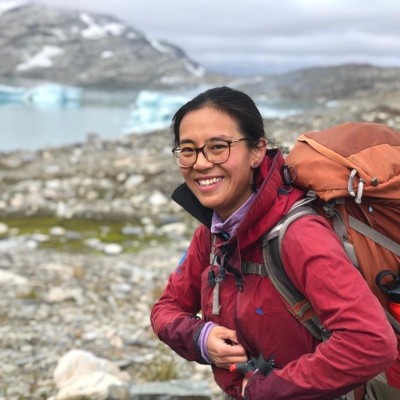
During summer 2025 I (Chloé Duprat) found myself inside the IPCC’s Working Group I, the branch that focuses on the physics behind climate change. I joined its Technical Support Unit as an intern, working with Drs. Gong and Albarus to take a closer look at how Indigenous Knowledge is (and isn’t) entering the organization’s processes. They had recognized a gap in the report’s outline on this matter and wanted to address it head on. Together we conducted a literature review, dug through internal IPCC documents, and, most importantly, held interviews with panel members and representatives of Indigenous organizations themselves. We found a combination of progress, failures, opportunities, and essential next steps.
A Slow Shift Inside the World’s Top Climate Body
The IPCC has progressively acknowledged the importance of Indigenous Knowledges. During its 5th Assessment Cycle (2008-2014), it worked with the UNESCO LINKS (Local and Indigenous Knowledge Systems) program to highlight Indigenous Knowledge contributions to climate adaptation.
Another embryo of inclusion occurred within the Sixth Assessment Cycle (2015-2023), led by Working Group II, which assesses climate impacts and adaptation. In its report the group highlighted climate change impacts on Indigenous peoples and their resilience systems. These first steps fueled hope that deeper change would follow.
In 2023 the IPCC started its 7th Assessment cycle, and differences from past reports are noticeable. According to our analysis of planning documents and internal databases, there are increasing references to Indigenous Knowledges in early vision documents and outlines. Within Working Group I (long cautious in this area, given its emphasis on the physical science behind climate change), these references have more than tripled. And for the first time, the term appears in the group’s report outline. Indigenous experts are also more visible in the overall scoping process and author nominations.
This shift coincides with what the IPCC presents as a milestone: the accreditation of two Indigenous observer organizations , the Inuit Circumpolar Council and the Assembly of First Nations, in 2020 and 2025 respectively. Observer status is generally open to organizations that apply and meet the criteria. It allows organizations to attend plenary sessions, submit written inputs and, most importantly, nominate experts for author selection.
But counting references and potential participants can only tell part of the story. Efforts remain uneven among working groups, and observer status is limited in that observer organizations can attend and contribute, but not negotiate.
A clear example is the Summary for Policymakers: arguably the most read output of the IPCC, it is discussed line by line in plenary sessions, only by government representatives. The numbers also remain low: Out of 1,019 applicants for authorship in Working Group I, only 27 self-identified as having Indigenous backgrounds or knowledge. And who knows how many of their recommendations will be selected?
So why does an institution so well respected, and so publicly committed to equity, still include Indigenous voices so marginally?
Where the IPCC Model Falls Short
The IPCC was designed to assess scientific literature. That structure alone creates a major obstacle because not all Indigenous Knowledge is in written format. Sometimes it is transmitted orally, through songs or ceremonies.
To publish this rich, non-peer-reviewed form of information, authors need to work around the rules. In the past authors have typically assigned Digital Object Identifiers, or DOIs (codes used to catalogue published material) to oral contributions from Indigenous Knowledge holders for them to become citable under IPCC rules. This resulted in a compilation of Indigenous Knowledge case studies within Chapter 18 of the Working Group II Sixth Assessment Report. For example, a section depicts the collaboration between Sámi knowledge and science to effectively manage and preserve a river in Finland.
Language poses another barrier. Most IPCC processes run in English, meaning that Indigenous representatives without strong English proficiency often must arrange and fund translation themselves. This shifts the burden of participation onto those already underrepresented.
In addition, many Indigenous experts lack institutional affiliations, which means they may not have access to expensive paywalled journals or travel funding necessary to attend author meetings happening across the globe.
Perhaps most strikingly, according to our interviews with IPCC scientists and staff members, inclusion efforts are mostly bottom-up, carried by certain key figures within the institution. So advancements rely on a few “allies” within the IPCC, without a systematic structure backing them.
Why Small Fixes Won’t Work
So far most IPCC reforms have focused on surface-level changes: more references, more nominations, more diversity language.
These are what systems theorists call shallow leverage points , adjustments to parameters rather than transformations of the system itself. In fact, scholars argue that this is a structural problem: although past efforts for Indigenous inclusion should not altogether be dismissed as useless, they have been slowed down by a lack of institutional reform and the absence of clear guidelines on how to implement the change.
Thus, the deeper issue may very well be institutional in design: The IPCC was built on a hierarchy of knowledge , with peer-reviewed, positive science at the top. And like most systems, whether consciously or not, it is resistant to transformative change.
So what do experts and Indigenous representatives identify as concrete pathways toward structural change?
A Roadmap Toward Transformation
From most immediately feasible to most demanding, we think four pathways emerge:
First, drafting clear guidelines to include Indigenous Knowledges.
The IPCC needs to write clear institutional guidance to accompany authors, Technical Support Units, and other members of the IPCC on how to properly include and work with diverse sources of knowledge. This involves asking critical questions, like how to include without extracting , and how can Indigenous epistemologies and cultural norms remain respected throughout the process?
Some advocates call for a dedicated chapter or special report on Indigenous Knowledges for future assessments. Others argue for a “weaving through” approach, where Indigenous Knowledges appear across all chapters rather than being isolated.
And, of course, there’s a third position: doing both.
The second pathway: learning from institutions that already do this better.
More dialogue is needed with institutions that know how to work with Indigenous Knowledge holders or include Indigenous people on their teams. This is the case of the Arctic Council or the Intergovernmental Platform for Biodiversity and Ecosystem Services, which have both been praised for their inclusive model. Among other efforts , IPBES has created a liaison group tasked with ensuring that Indigenous and local knowledge is included throughout assessment chapters, has organized workshops and dialogues at multiple stages of the assessment process and gathered knowledge as well as gray literature in a centralized database.
Encouragingly, exchanges with IPBES have already begun. In May 2025 we met their team at UNESCO’s Paris headquarters. They walked us through their efforts to give more importance to interdisciplinarity and Indigenous peoples. They described this as a major turning point for IPBES, a “lightbulb moment” in their words, where inclusion was no longer a box to tick but a strong act toward legitimacy and inclusivity, benefiting their organization as much as Indigenous communities.
Their message was very clear: The IPCC could choose to borrow from these models, although it would be advised to refrain from the notion of Indigenous and local knowledge, widely criticized for conflating two very different knowledge types. Taking that into account, cross-institutional learning could catalyze action, especially if efforts are long-term and not just temporary engagements.
This brings us to the third pathway: ensuring Indigenous authorship and knowledge co-production.
Indigenous organizations consistently emphasize a key principle: “Nothing about us without us” . Meaningful inclusion means more Indigenous authors , namely in leadership roles, and assessments designed at the crossroads of both knowledge systems. This is commonly called knowledge co-production and involves repeated efforts to facilitate inclusion, such as dialogues and workshops. Examples of methods are yarning and sharing circles , traditional practices that have long been at the center of Indigenous culture because they allow for dialogue and collaborative decision-making.
Other interesting research practices that aim to combine science and Indigenous Knowledges include two-eyed seeing or photovoice . The former is a framework in which both knowledge systems inform research design and decision-making, without subordinating one to the other. The latter uses photography for communities to share their experiences with researchers or decision-makers.
Finally, we come to the fourth pathway: establishing institutional reform.
Some propose creating an Indigenous task force or liaison body within the IPCC, similar to the structure used by IPBES. Its main mandate would be to ensure the inclusion of Indigenous Knowledges across assessment chapters where such expertise is relevant. A task force could also enable the inclusion of Indigenous people who perhaps do not hold formal degrees but possess valuable generational lived knowledge.
More importantly, such institutional backing would help solve the problem of lone committed agents fighting for change. It could give the issue of Indigenous Knowledge inclusion greater transparency. Overall we believe institutional change could provide a stable foundation for progress.
The Difficult Questions Still Ahead
The debate ultimately comes down to a deeper tension: Where is the meeting point? Should Indigenous Knowledge be translated into scientific language to fit IPCC standards? Or should the IPCC change its procedures to accommodate different ways of knowing?
In reality the challenge lies in finding ethical ways to bridge the two. But the gap can feel wide, especially in Working Group I, where physical science and quantification dominate.
Some scientists worry that expanding the definition of knowledge could undermine the rigor of assessments. Others argue that positivist science is not culturally neutral and that true pluralism requires institutional transformation.
There are also political constraints. The IPCC is an intergovernmental body in which decisions often require consensus among member states. What happens when they contest the political status of Indigenous peoples within their territories?
Reading through the literature as well as taking from our interviews, we see that there are levers for meaningfully including Indigenous peoples in IPCC assessments:
Developing guidelines for the inclusion of alternative knowledge forms.
Cross-institutional learning with organizations such as IPBES and the Arctic Council.
Enhancing Indigenous author participation and advancing co-creation of knowledge.
Ensuring participation through an Indigenous task force or liaison group.
Where debates and open questions remain, embracing knowledge pluralism clearly means focusing on the strengths of diverse approaches, in a context of growing attention to Indigenous sovereignty and epistemic justice at a global scale. And the IPCC now explicitly acknowledges this ambition.
The question remaining is whether the world’s most influential climate body is ready to transform. Or will “progress” amount to additional citations, a footnote at the margin of reports?
Republish this article for free! Read our reprint policy .