This story was originally published by The Revelator. Subscribe to their newsletter.
“Who the f*ck wants to kill penguins?” asks MI5 supervisor Jackson Lamb in the spy thriller Slow Horses.
It seems we do. Humans.
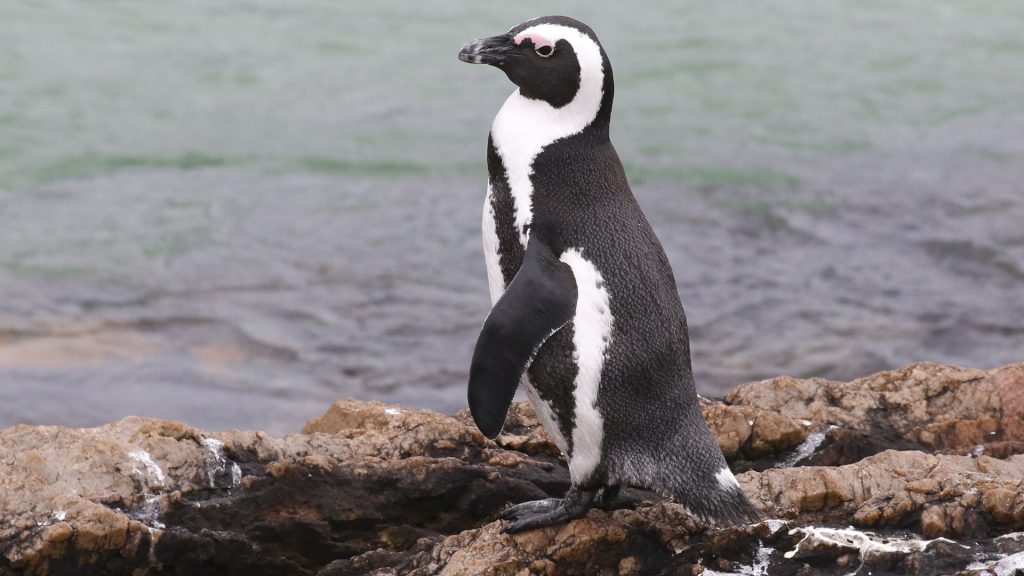
Over 60,000 penguins off the coast of South Africa, to be more specific.
Through a combination of human-induced climate change and overfishing, we caused sardine populations to collapse. Sardines who are vital for African penguins’ survival.
These penguins normally prepare for a brutal 21-day fasting period, during which they must stay on land to shed and replace their feathers by munching on sardines to build up fat reserves that allow them to survive the fast.
Instead we took their food, and then they starved. More than 60,000 in just eight years.
We’ve pushed them entre la espada y la pared — between a sword and a wall. On one side, a changing climate. On the other, an empty ocean.
And it’s not just penguins.
Late last year a study found that the November floods in Sumatra may have pushed the world’s rarest great apes, Tapanuli orangutans, even closer to extinction. Before the floods fewer than 800 remained in the wild, living in habitats already threatened by industrial activity and growing conflict with humans. According to reporting from Inside Climate News, those floods were “likely exacerbated by widespread deforestation, which stripped the land of its capacity to absorb rainfall and retain soil.” Much of this deforestation was caused by infrastructure development, mining, and palm oil expansion in and around the orangutan’s habitat.
The Tapanuli orangutan. Photo: Tim Laman (CC 4.0)
Between causing extreme heat events and making drastic changes to wild habitats, we’re narrowing the safe zone for animals, leaving them with nowhere to go. We may effectively be pushing nearly 80,000 animal species toward extinction in under 80 years.
And yet those same wild animals have a role to play in stabilizing the climate. If we give them a hand.
Wild Animals Are Our Allies
Late last year in Brazil, governments from countries that are parties to the United Nations Framework Convention on Climate Change met for the 30th time to negotiate a response to the climate crisis — a meeting called COP30.
In the midst of it, at an official event, scientist Dr, Ana Cristina Mendes-Oliveira talked about agoutis, small rodents who live in the Amazon and are responsible for the evolution of Brazil nut trees.

Agoutis, with their sharp teeth and strong jaws, are among the few animals able to crack the nut open. Because one nut can hold up to a couple of dozen seeds, more than a hungry agouti can eat at once, the animals have the habit of burying some of them to snack on another time. They also have the habit of forgetting where they buried them. And so many of those forgotten seeds survive and sprout into impressive trees that can reach heights of up to 160 feet and live for hundreds of years.
Through their hunger and forgetfulness, agoutis enhance carbon sequestration and storage in the Amazon.
Like agoutis, many other wild animals disperse seeds, pollinate, and help cycle nutrients in ecosystems, contributing substantially to the maintenance and restoration of key natural environments.
For example, take the tapir, another forest maker in the Amazon:
-
- They swallow whole fruits and release thousands of seeds in their dung. Many of these seeds belong to species that grow into large, carbon-rich trees.
- Because they travel and drop their waste more often in degraded parts of the forests, they often deliver seeds in spots where regeneration is most needed.
- Since their movements can span miles, they’re long-distance seed dispersers who help connect fragmented habitats.
Beyond these two cases, there are many more, including the American alligator. Studies show that ecosystems with more diverse animal communities are often associated with higher levels of carbon storage and sequestration.
The loss of wild animals in their natural habitats is a problem — not only for them but for our climate, sustainability, and wellbeing.
Animal-Washing No More
At UNFCCC COP30 in Brazil, governments spent two weeks talking about how to confront climate change, including in food systems, in relation to biodiversity loss and desertification, and through adaptation efforts. These issues are inseparable.
And one way or another, animal wellbeing sits at the center of them all.
And yet, despite the walls at the venue being draped with beautiful images of Amazon wildlife, animals themselves barely featured in the negotiations. Mitigation discussions largely sidelined food systems, even though they are responsible for at least a third of global greenhouse gas emissions. And when food systems were discussed, they were discussed without meaningfully addressing the climate, land-use, and biodiversity impacts of industrial animal agriculture or fishing, or what those systems mean for the animals trapped inside of them. Adaptation was debated without recognizing wildlife’s active role in stabilizing ecosystems.

That is animal-washing: celebrating animals in imagery while sidelining them in policy.
This matters not only because animals are on the frontline of the climate crisis, but also because they are ecosystem engineers, essential for effective climate action. Ignoring their contributions in climate policy is a missed opportunity.
Encouragingly, that logic is starting to reach policymakers.
At COP30, Zimbabwe’s Ministry of Environment announced that African leaders had agreed to back a Wildlife for Climate Action Agenda, paving the way for a Global Wildlife for Climate Action Declaration to be launched at COP31. This political commitment was formally endorsed weeks earlier at the African Union Biodiversity Summit in Botswana, where heads of state adopted the Gaborone Declaration on Biodiversity, including a pledge to promote wildlife as part of Africa’s climate response.
In a world that’s pushing penguins, orangutans, and thousands of other species between a sword and a wall, that shift matters.
Because if we stop treating animals as background scenery and start recognizing and protecting them as climate allies, we may yet give both them and ourselves a fighting chance.
Republish this article for free! Read our reprint policy.
Previously in The Revelator:
Could Baird’s Tapirs Be a New Conservation Ambassador?