This story was originally published by The Revelator . Subscribe to their newsletter.
Economists and business leaders embrace a twisted concept of evolution: Corporations and systems survive, they say, due to competitive advantages, which makes them superior and capable of dominating (or destroying) weaker systems, companies, people, and nations.
Mona Shomali is the author of the new book, Water Mamas .
This, they argue, makes human systems just like nature. The weak fade away from ecosystems, while the strong persist: so-called “survival of the fittest.”
The scientist whose work inspired that term would disagree with them.
I taught a class at the New School in New York City on the relationship between culture and the environment. As I told my students, the defenders of capitalism use “survival of the fittest” and an incorrect perception of competition in the natural world to justify removing social safety nets for the most vulnerable people in our society — a rationale implicit, for example, in current actions by the current administration.
In my experience anytime someone questions whether competition should be a core value — as in capitalism — people often say, “It’s natural! Just look at nature!”
But what if this defense of capitalism as natural is flawed and competition has never been the only way to “survive” or be “fit” in an ecosystem? What if those who interpreted naturalist Charles Darwin’s theories and applied them to human societies and economies just cherry-picked the parts of the theory that seemed to justify their agenda?
Social Darwinism
In the mid-1850s Darwin began to observe and study how individual organisms and species find their niche. When an animal has found its place and function in an ecosystem, he wrote, that animal has found its niche. Although species can compete for a niche, they can also adapt and cooperate for a niche. A species is the fittest when enough of its members have found a niche within the ecosystem where they live. And when enough members have found a niche, Darwin explained this process as “survival of the fittest.”
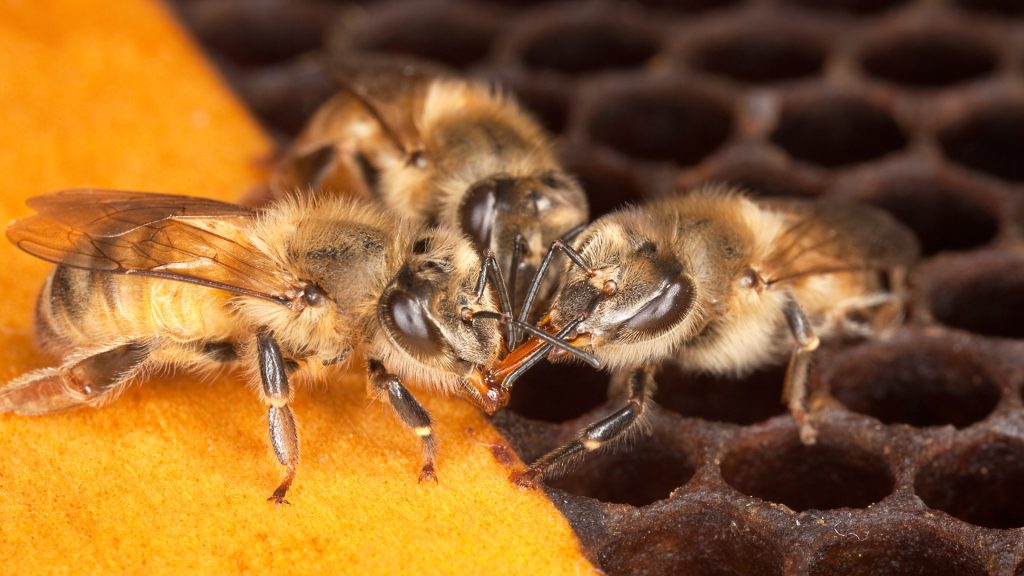
Photo by Hulki Okan Tabak on Unsplash
In the decades after Darwin published his groundbreaking book, On the Origin of Species , a group of Western thinkers used his theory of natural selection to try to explain fierce and cruel competition in human society.
Social Darwinism, as they defined it, argues that individuals, groups and peoples are subject to the same Darwinian laws of natural selection as plants and animals. English thinkers such as Herbert Spencer advocated this theory in the late 19th and early 20th centuries, and it echoes today.
Social Darwinism purports that the upper classes have competed for fitness and won the natural selection game. It falsely suggests that certain social classes are superior and that social inequity and political inaction are a natural result of competition.
It should be no surprise that European colonialist thinkers used social Darwinism to rationalize away pressure for progressive reforms.
But such justification is based on a misunderstanding and bastardization of Darwin’s observations, because Darwin had also observed the equally important role of cooperation in ecosystems. Competition and cooperation are both natural among all species.
Cooperation as Mutualism
It’s essential not to misrepresent ecosystem dynamics to justify a way of organizing human society.
According to the study of ecology, a relationship between two species who both benefit from cooperation is known as mutualism . This relationship gives both species an advantage that they would otherwise not have. Mutualism is a biological cooperation that allows two organisms to improve their chances of success and reproduction in the ecosystem.
For example, dolphins need the help of tuna to find the smaller fish that they both eat. Ecologists call this joint hunting. In another case, oxpecker birds eat the ticks off the coat of African impala antelopes. The oxpecker benefits from having a meal, and the antelope benefits from having fewer annoying ticks.
Pollination is another example: Insects carry pollen from one plant to another while benefiting from the nectar food source of the flowers they land on. As insects such as bees or butterflies land on flowers to eat, they also fertilize the plants with the pollen on their bodies. Pollen is transferred from the stamen to the stigma, which allows for production of flowers and fruits. The insects that specifically pollinate plants in return for food are referred to as beneficial insects.
Cooperation as Adaptation
In On the Origin of Species , Darwin described a process where certain species prevailed over other species because they were better at adaptation. They had cooperated with other organisms or with non-living factors in their environment so that they could survive. Ecologists refer to adaptation as the process of changing over time so that an organism can be better suited to find a niche and survive in the ecosystem. When the ecosystem rapidly changes or disappears, the species is forced to consider new cooperation within the new ecosystem.
The most famous early descriptions of adaptation by Darwin were his studies of animals of the Galápagos islands of Ecuador. After observing the birds there, Darwin noticed that the shapes of beaks of finches had adapted over time to accommodate the shapes of what they were feeding on: flowers, insects, seeds, and fruits.
Camels have also successfully adapted to one of the harshest ecosystems: the hot and dry desert. A camel can go a week or more without drinking water, which is longer than most animals can tolerate. Their bodies also conserve water by not sweating as the temperature rises. Camels can also last several months without food, because they store fat in their humps. However, if the dry desert suddenly became cold and wet, a camel would be unprepared and would be challenged to quickly adapt.
Some animals have adapted to their environments as protection from predators. One great way to avoid being eaten by a predator is to camouflage themselves among the foliage. Many insects, such as the praying mantis, have evolved to look like the leaves they live among.
Over thousands of years, plants and animals have evolved to tolerate sudden disturbances or persistent conditions in their local environments. Every living organism is a part of a species that has figured out how to thrive despite fluctuating ecosystem conditions. Adaptation means that the species needs to redesign and remodel itself in order to find a new niche in a changing ecosystem. To survive, the species will have to find a new purpose.
Climate Change: The Failure to Adapt
Rapid changes in an ecosystem such as climate change are problematic and do not allow time for humans, animals, and plants to adapt to the new and sudden change in their ecosystem.
Animals and plants adapt and cooperate, but this is not a rapid process, and adaptive changes within an ecosystem can take multiple generations or centuries. A species dies if it does not adapt fast enough, but species who show the greatest cooperation and adaptation will have an enormous advantage in confronting disturbances and natural disasters.
To take the idea of adaptation a step further, I would argue that our failure to combat climate change is rooted in our human inability to adapt to the conditions causing climate change. We adapt by recognizing the limitations of the environments we live in and plan accordingly so that we don’t exploit, overconsume and pollute. If we could adapt to the limitations of what our ecosystems can tolerate — for example, how much carbon our atmosphere can tolerate — we would have a better chance of survival.
Competition and False Scarcity
Species are always competing for a niche, as they are striving for the same spot in the ecosystem. Competition happens when organisms fight over the same or similar niche because there is not an adequate supply of a limited resource in the same area.
For example, cheetahs and lions feed on similar prey (for example, impalas). These competitors will also kill each in the fight for resources.
When species fight over a niche, they rely on competition. The species that wins the competition passes on their physical traits to future generations, while the species that loses will die out. Competition “works” because of a scarcity of resources.
As a human society, we can decide and organize ourselves to determine what to do when resources are scarce. We have an executive function that allows us to manage or compensate for scarcity. I would argue that many governments create false scarcity through their priorities and policies and choices of what civic programs decide to fund and not to fund. This practically guarantees “losers” in our social systems.
Recognizing Human Cooperation
Darwin explained in his writings that the “fittest” are not necessarily the biggest, strongest, or best fighters of the bunch. He detailed how a species can be “fit” and survive by cooperation.
The misapplication of Darwin’s theory by Western thinkers to focus selectively on competition is far reaching; social Darwinist bias toward competition has been used to justify private ownership of ecosystem resources in place of communal ownership. When colonizers landed in the Americas, Australia, New Zealand, and Africa, they broke up communally held Indigenous land and forced privatization. In private ownership, people compete to individually own a good that others can be excluded from using. In communal ownership, adaptation and cooperation are required to develop a structure of sharing.
In another one of my lectures, I discussed how Elinor Ostrom won a Nobel Prize for Economics for her work pushing back against the inevitability of the “tragedy of the commons” and illustrating that communally held resources can be well managed . She described case study after case study of how Indigenous cultural institutions were developed to manage cooperation — or as she called it, collective action — as a direct challenge to the idea that privatization is a necessary part of modernization and status quo in the Western world.
Social Darwinists have denied the many aspects and behaviors of human society that are based on cooperation, and that’s had numerous negative implications for humanity and the planet. It’s important that we do not neglect and ignore the existence of successful cooperation within our own human ecology. With an understanding of real ecosystem dynamics, rather than biased and false extrapolations, we can reclaim cooperation.
References:
George E. Simpson, “Darwin and Social Darwinism,” The Antioch Review 19, no. 1, (1959): 33-45.
Elinor Ostrom, Governing the Commons: The Evolution of Institutions for Collective Action (Cambridge University Press, 1990).
Previously in The Revelator:
Darwin the Storyteller