This story was originally published by The Revelator . Subscribe to their newsletter.
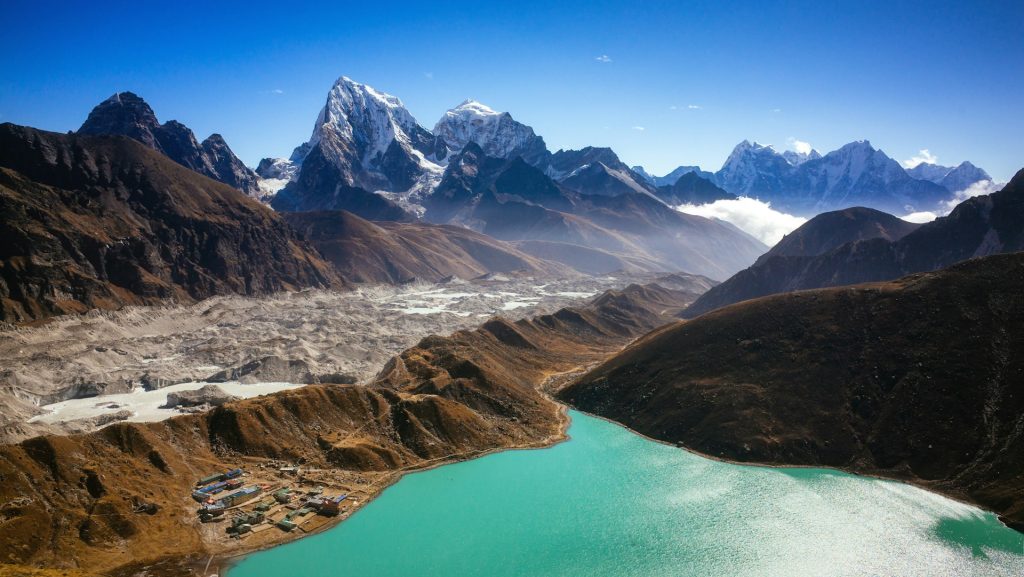
The Himalayas are young, fragile mountains, yet we treat them as if they’re infinitely resilient. In the name of development, mountains are blasted from peak to peak, hollowed out to make roads, hydropower projects, and tourist complexes.
The Himalayas are not just a backdrop for human ambition. They are living systems. Every explosion, every slope flattened, every tree cut weakens these mountains, leaving them ready to shatter.
For those of us who grew up here, these mountains are more than stone — they’re home and history. They shelter countless birds, mammals, and delicate ecosystems. Destroying this delicate landscape by cutting down forests or choking rivers is not just a loss of the very resources that feed and protect us: It’s a series of personal heartbreaks.
Chaos and Destruction
When forests are cleared, wetlands drained, and slopes destabilized, entire ecosystems lose their balance. Floods, landslides, and erosion then hit both communities and wildlife alike.
In August a catastrophic flow of mud and debris buried parts of Dharali village in Uttarkashi. Similar disasters this year brought chaos to regions like Himachal Pradesh, Uttarakhand, and Jammu and Kashmir. Some of these events brought worldwide headlines, if just for a few moments. Months later residents continue to struggle to recover and rebuild.
VIDEO
These disasters illustrate three converging factors: The mountains are fragile, the weather is getting extreme, and people are making it worse.
Sudden, huge floods are typically triggered by a “rain bomb” (cloudburst), when the tall mountains force monsoon clouds to dump their water all at once. Because the air is warmer now (a key principle of climate science), it holds more moisture, making these rain bombs more frequent and intense.
Simultaneously, rising heat is rapidly melting glaciers, causing unstable glacial lakes to burst and send walls of water, ice, and rock downstream.
This natural danger is amplified by human hands: Cutting trees and carelessly building roads and dams destabilizes the mountain slopes, turning a heavy downpour into a guaranteed disaster.
Ground Zero for Climate Risk
The Intergovernmental Panel on Climate Change’s Sixth Assessment Report confirms what mountain communities have long feared: Human-driven climate change is making heavy rainfall and floods far more frequent.
Flood events have increased fourfold in the tropics and 2.5-fold in northern mid-latitudes since the 1980s. At 3–4 degrees Celsius of warming, the number of people exposed to river flooding could more than double, while global damages may rise four- to fivefold compared to a 1.5°C world. Every fraction of a degree matters.
What does this mean in the Himalayas? Rising temperatures — accelerated locally by increasing use of air conditioners, vehicles, and fossil fuels — are melting glaciers faster, forming unstable lakes, and fueling cloudbursts and sudden, intense rainfall. The World Meteorological Organization notes that vehicle emissions and urban heat significantly amplify local warming in Himalayan towns, contributing to faster glacier retreat.
At the same time, the continuous cutting of trees for development removes the natural sponges that once soaked up rain and held soil in place. Without forests, wetlands, and healthy soil to absorb water, every monsoon surge rushes downhill with devastating force.
The Himalayan ecosystem is losing its natural shields just as climate stress intensifies. Today a single cloudburst can become a flash flood; a heavy rainfall can trigger landslides; even moderate storms can wreak unprecedented destruction.
Man-made destruction intensifies these problems. Roads blasted through fragile slopes, hydropower projects imposed without adequate climate-risk planning, and unregulated tourism have made the mountains more vulnerable. Each project removes the natural resilience the Himalayas have relied on for millennia.
Bekar village in Himachal Pradesh not only washed away following one of these storms, it became a warning: Hollow mountains cannot protect us if we hollow them further.
But there is still a choice. We can continue developing these mountains until they collapse under our weight, or we can respect and restore them.
Three Urgent Steps
The path forward — and the survival of Himalayan communities — involves three urgent steps.
These are not just theoretical policy suggestions. They’re practical imperatives born from decades of living on this land and witnessing its rapid decline, informed by my professional analysis as a postgraduate in environmental science.
Limit High-Altitude Blasting and Construction: Development in fragile zones must pass rigorous climate-risk and ecological assessments. Roads, dams, and buildings should be redesigned or relocated if they compromise mountain stability. This requires the Indian government and state authorities to enforce existing environmental laws without exception. Every decision to flatten or tunnel through a slope must account for both human and ecological safety.
Restore Natural Buffers: We must aggressively restore our natural defenses. This means reforesting catchments, protecting wetlands and alpine meadows, and maintaining healthy soils. These ecosystems absorb water, reduce flood force, and anchor slopes — offering protection far beyond concrete walls.
Every tree planted, every meadow preserved, is a step toward resilience. This action requires a partnership between local communities, who know the land best, and the government, which must fund and support these vital projects.
Plan Hydropower and Energy Use with Climate in Mind: Hydropower projects must be evaluated not just on profit, but on climate resilience — the risk they pose from glacial lake outburst floods and cloudbursts.
Meanwhile, reducing vehicle emissions, regulating energy-intensive cooling, and promoting sustainable energy will help slow glacier melt and limit cloudburst intensity.
The ultimate responsibility rests with the international community to meet global climate targets, but India must lead by prioritizing green energy and conservation in its highest, most fragile zone.
Without these steps, the Himalayan mountains will die young. But if we embrace sustainable change now, the mountains, the local wildlife, and the people who live here can persist for centuries to come. Let us come together to create a green future where every small act and great ambition is rooted in respect for nature.