This story was originally published by The Revelator . Subscribe to their newsletter.
Species name:
Bull kelp (Nereocystis luetkeana )
Conservation status:
The IUCN Red List has not yet assessed this species, but state agencies, NOAA, nongovernmental organizations, and underwater survey groups such as ReefCheck consider bull kelp to be highly vulnerable, particularly in Northern California, Oregon, and the Salish Sea in Washington State and Canada.
Description:
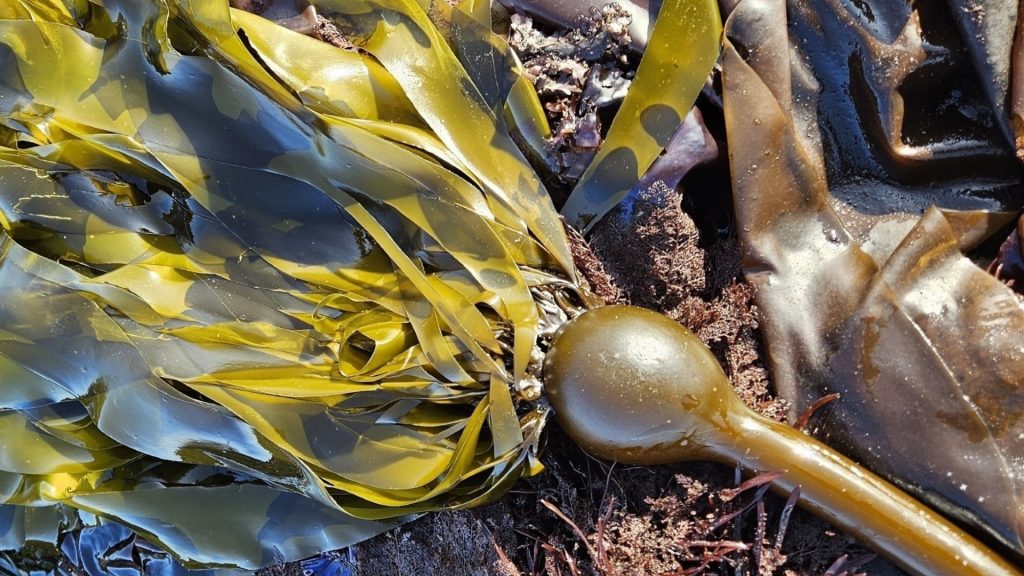
Bull kelp is an annual species of marine algae that resides in temperate (cold) ocean waters and can grow up to 60 feet in one season, accumulating biomass via photosynthesis faster than most other organisms on Earth. It has a small holdfast attaching it to a rocky bottom, and a long, singular stipe (stem) that ends in a gas-filled bladder holding a profusion of golden blades up toward the surface. It tends to live in nearshore waters up to 60 feet deep, where sunlight penetrates to the ocean floor and there is a ready supply of ocean nutrients, resupplied either by wave action, or current flowing through channels. A tiny bull kelp starts its growth in early spring on the ocean floor, and by mid-summer a massive, surface-topping bull kelp produces spores in specialized patches called sori, which eventually drop away to the ocean floor to start the process again.
Mural by Josie Iselin being used by the Northwest Straits Commission in Washington State to commemorate Bull Kelp Day on April 16th.
Where they’re found:
Bull kelp grows along the Northeastern edge of the Pacific Ocean, where it encounters the North American continent. Nereocystis luetkeana ranges from Central California north through Oregon, Washington, British Columbia, and Southeast Alaska. Its reach ends in Southwest Alaska beyond Kodiak along the Aleutian Islands. The bull kelp forest is typically within a few hundred yards of the coastline, depending on the rich upwelling that typically occurs in spring to bring nutrient riches from the deeper waters up to the surface.
Why they’re at risk:
A series of ocean events has caused the kelp forests of the Northern California and Oregon Coasts to collapse and disappear. In Puget Sound and the Salish Sea, historic kelp beds have also disappeared. Warming oceans start the downward decline, and a concurrent wasting disease killed off sea stars, the top predator of sea urchins, herbivores who will graze down a kelp forest. Biodiverse kelp forests — home to fish such as rockfish and juvenile salmon, prey fish for birds, abalone, and countless other organisms — have been transformed almost overnight into urchin barrens, a wasteland on the ocean bottom.
The giant kelp, Macrocytis pyrifera , of Southern California is equally at risk from warming ocean events.
Who’s trying to save them:
Many organizations, from NOAA marine sanctuary scientists, California and Oregon state agencies, many Tribes and First Nations, Parks Canada, The Nature Conservancy, Puget Sound Restoration Fund, Northwest Straits Commission, and volunteers out collecting purple sea urchin on the weekends on the Northern California Coast, to name a few.
Mural by Josie Iselin being used by the Northwest Straits Commission in Washington State to commemorate Bull Kelp Day on April 16th.
Why I advocate for this species:
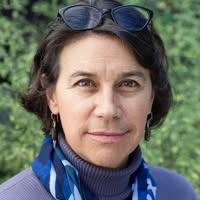
I fell in love with bull kelp as a beachwalker encountering their mighty tangles washed ashore after winter storms on beaches near my home in San Francisco. My feelings deepened as I jumped at any opportunity to snorkel in the bull kelp beds, especially around Mendocino and Fort Bragg on the northern coast of California, and even in Kodiak, Alaska.
Author Josie Iselin’s latest book on bull kelp.
Two inches above the surface and two inches below are like two different universes. The golden glow of sunlight through kelp blades is magical, like nothing else on Earth. Too few people know anything about the worlds below the surface. Divers are intimately familiar with the abundance under the lid of the tide. They have been on the front lines, watching the devastation of the underwater forests they revere. My artist’s eye and writer’s sensibilities were triggered into overdrive to make portraits of this magnificent organism and learn the bull kelp’s story.
As I have come to know the natural history, opportunism, and resilience of bull kelp, the richness of the forest it creates, and its sheer beauty, I feel passionate about telling this underrecognized story. My enthusiasm is contagious, and kelp conversations are expanding outward, helped by my various books on seaweed and kelp and by Above/Below’s all-things-bull-kelp webstory at bullkelp.info , and by the growing number of kelp advocates. These conversations are translating into community engagement — including Washington State’s Bull Kelp Day on April 16 — and acknowledgment that kelp recovery efforts must be funded.
What else do we need to understand or do to protect this species?
Bull kelp is an annual species, completing its life cycle over the course of one year. It can grow 40-60 feet in just a few months, stretching 10-12 inches a day if ocean conditions allow. This remarkable accumulation of biomass is a testament to the power of sunlight and the process of photosynthesis, but also to the nutrient-dense cold ocean waters that fuel this growth. If ocean water gets too warm, it can’t hold the nutrients needed for such prodigious growth, and the kelp gets stressed and vulnerable to other changing ocean conditions, such as loss of predators and overgrazing of sea urchins.
Bull kelp does not, itself, hold commercial value, but recognizing its importance for fisheries should increase levels of concern for bull kelp and for ocean health generally at all levels, from agency leads to the public. The loss of bull kelp is an indicator that we need to shift our economic systems entirely and decarbonize fast.
What you can do to help:
Be curious! Learn about these underwater systems like the kelp forest. Go to bullkelp.info to begin. If you live near the coast and are a diver, find a group that does underwater surveys, such as ReefCheck. On the California Coast, there are groups involved with urchin removal and kelp recovery in each region of the state. Go get involved; these efforts need you. Fall in love. Buy my trilogy of seaweed books for your ocean library. Reduce your carbon footprint.
Share your stories:
Do you live in or near a threatened habitat or community, or have you worked to study or protect endangered wildlife? You’re invited to share your stories in our ongoing features, Protect This Place and Save This Species .
Republish this article for free! Read our reprint policy .