
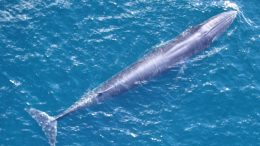
What whale are we talking about this month?
Thanks for asking. This time we’re looking at Rice’s whale (Balaenoptera ricei), also sometimes referred to as the Gulf of Mexico whale.
Don’t you mean the “Gulf of America” whale?
Don’t get me started.
Why not? That would actually be pretty good branding.
You know, you’re kind of right. The Trump administration, which insists on calling the Gulf of Mexico the “Gulf of America,” recently put a target on these rare, uniquely American whales’ backs by prioritizing oil and gas development in the Gulf of Whatever You Choose to Call It. A 15-minute, closed-door meeting of the rarely convened Endangered Species Committee — colloquially known as the “God Squad” for its ability to override the Endangered Species Act — was all it took to remove Rice’s whales’ protection in the name of “national security.”
Many conservationists fear this will push Rice’s whales to extinction.
That sucks. Are they really that rare?
Yup. No one knows exactly how many are left, but current estimates put the population at fewer than 100, probably closer to half of that. (The most commonly used number is 51.)
Geez, that really sucks. How’d their population get so low?
Well, for one thing, these whales were kind of hiding in plain sight, so no one prioritized their conservation. For many years they were (wrongly, it turned out) considered to be a subpopulation of Bryde’s whales (B. edeni), a species with a population so healthy that they were heavily hunted in the 20th century. It wasn’t until 2021 — just five years ago — that a study of the Gulf whales’ genetics and skeletal structures revealed them to be a different species.
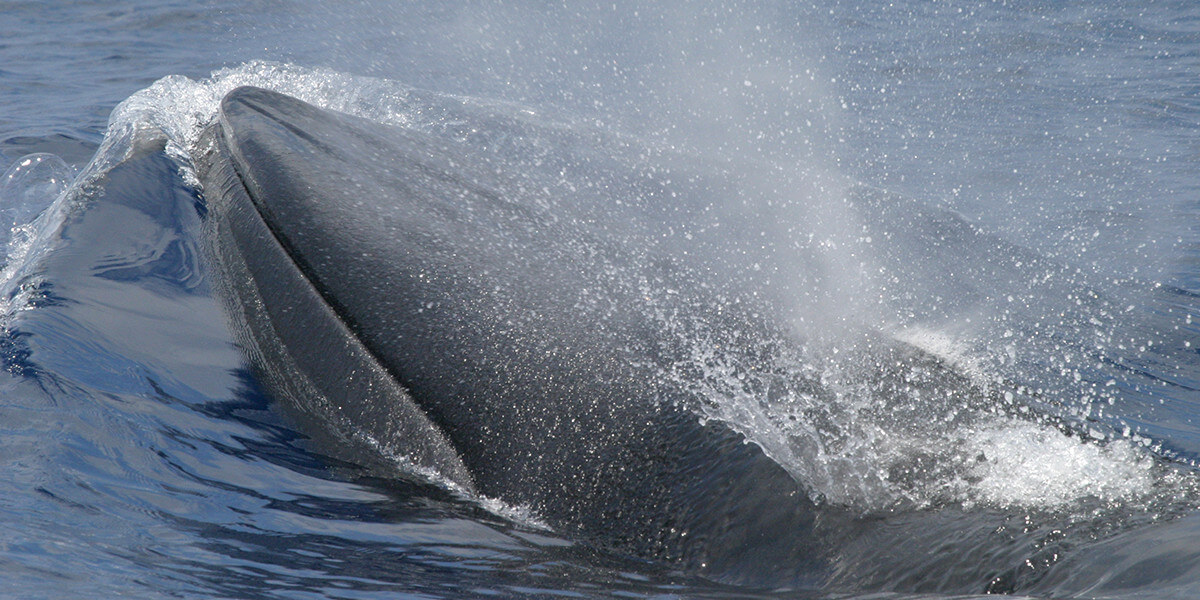
That misidentification probably made it easier to overlook how many whales in this region died from ship collisions, oil pollution, entanglement in fishing gear, and other threats, including ocean noise (which they find particularly disturbing). Those same factors continue to threaten them today, while climate change poses a long-term threat to their prey and other potential factors within the Gulf.
That makes me sad. Tell me something cool about them to pull me out of my depression spiral.
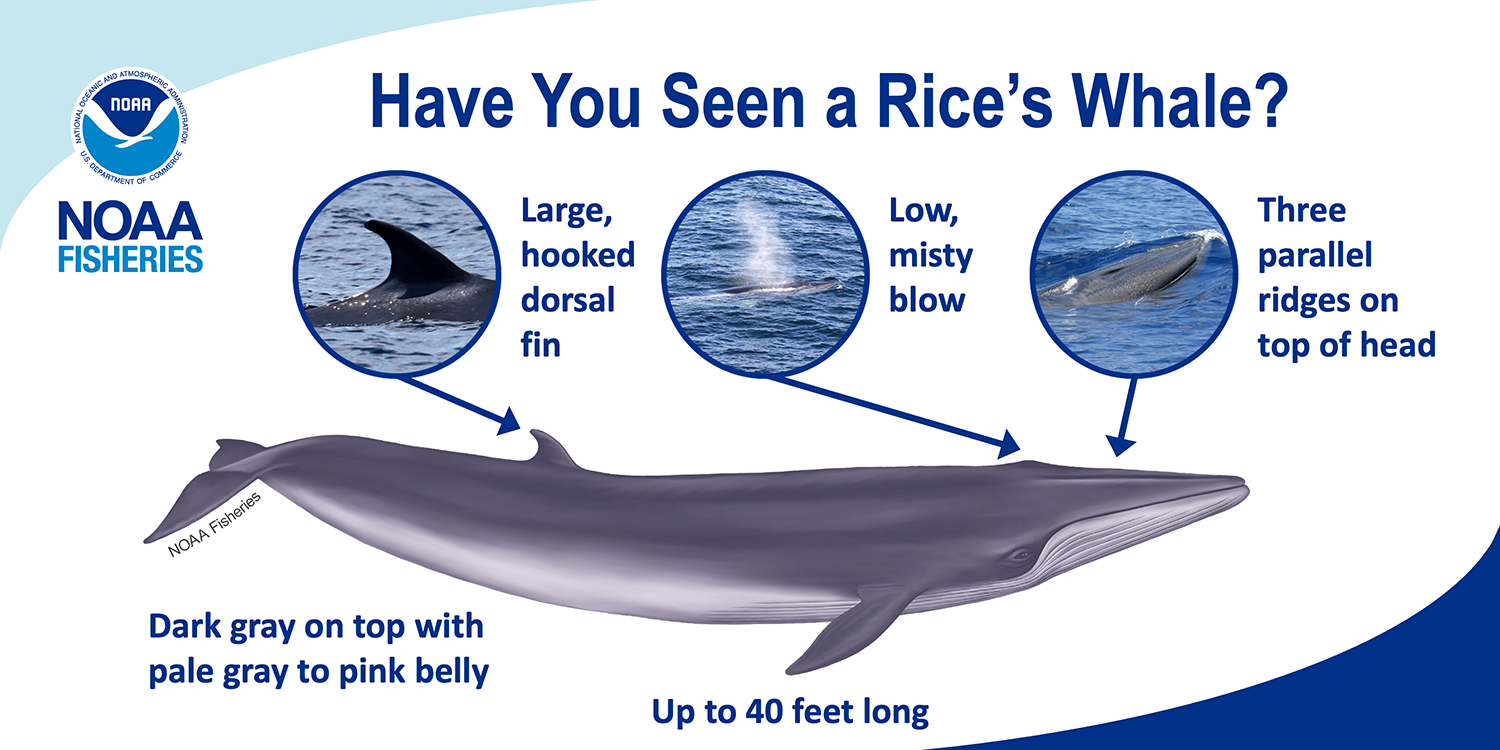
We don’t know a lot about Rice’s whales, but what we do know is pretty cool. They’re a little over 40 feet long — that’s about the length of a city transit bus or as tall as a four-story building. Scientists have documented that they make some unique sounds that resemble long moans. They’re lifelong residents of the Gulf — unlike other species, who migrate — and spend a good chunk of their days hundreds of feet beneath the surface, where they find most of their food.
Speaking of which, they’re also baleen whales, meaning they use their “teeth” to filter out yummy silver-drag driftfish and other prey from the water.
Yeah, I got the “baleen” part from their taxonomic name.
You’re right, that was a dead giveaway. Not all baleen whales are from the genus Balaenoptera, but all Balaenoptera are baleen whales.
Go figure. So speaking of the name, what’s the deal with “Rice’s?”
That’s after whale scientist Dale W. Rice, who first recognized the Gulf whales as something different in 1965, although he didn’t have the genetic tools at the time to ID them as a unique species. (Visually, they’re almost identical to Bryde’s whales.)
Rice himself was an interesting scientist who conducted groundbreaking studies of whales, including 164 scientific publications covering multiple species.
Before that, though, he was part of the team that first banded Wisdom, the world-famous albatross, on Midway Atoll in 1956. That band (a little metal ring with a unique identification number, #Z333) allowed scientists to track her for decades — and boy, have they learned a lot. Wisdom has flown more than 3 million miles over the past 70 years and is still around and active today. In fact she’s the world’s oldest known wild bird, still laying eggs as of last year.
Wow, maybe she could teach Rice’s whales to be better breeders.
I’ll see if Duolingo offers classes in albatross and whale.
Leave the snark to me, dude. So, if I wanted to see one of these amazing animals, could I take, like, a whale-watching boat or something?
Not much chance of that, I’m afraid. Rice’s whales are so rare that even scientists don’t observe them very often.
That said, the National Oceanic and Atmospheric Administration has published an excellent guide on how to identify Rice’s whales, and if you do happen to spot one you can report your sightings by calling (877) WHALE-HELP. Every observation provides critical information that can help conserve this species.
 Cool. So what else can your average Joe or Jolene do to help ensure Rice’s whales will always be out there?
Great question. The biggest priority is to stand up to the Trump administration’s push for more oil and gas development in the Gulf. Call your local representative to ask for renewed protections for these animals, post-haste. Our publisher, the Center for Biological Diversity, can help you do this by email, as can some other nonprofits.
Beyond that, a less direct but important step includes making sure any seafood you purchase from the Gulf is sustainable.
And, of course, you can make all manner of choices in your life that reduce your consumption of oil and gas. The more we push the transition to renewable energy, the less profitable it will be for the fossil-fuel industry to operate in the Gulf — or anywhere, for that matter. That’s the best possible scenario for Rice’s whales.
Cool. So is that it? What whale will we talk about next month?
Yup, that’s the skinny on Rice’s whales. I’m not sure about next month yet, but I’m thinking about diving into minke whales, a species that doesn’t get a heck of a lot of discussion. Of course you can always write to me at [email protected] to suggest your favorite whale.
Why would I do that when we’re talking about this right now?
Well, that’s really for everyone else out there, reading this.
Everyone else? Now I feel like someone’s eavesdropping on me.
Um … maybe it’s just a few ecologists studying your behavior.
Okay, that makes me feel better. I think.

Previously in The Revelator:
Songs Whales Sing: The Peculiar History of Commercial Whaling