
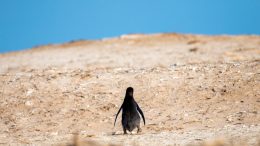
From the edge of a cliff in southern Peru, I watched as three Humboldt penguins made their way from their nests down a steep rocky slope, slipping at times, stopping and then starting again, tentatively navigating around sunbathing sea lions until they arrived, an hour later, on a precipice overlooking crashing waves, where they finally belly flopped into the water.
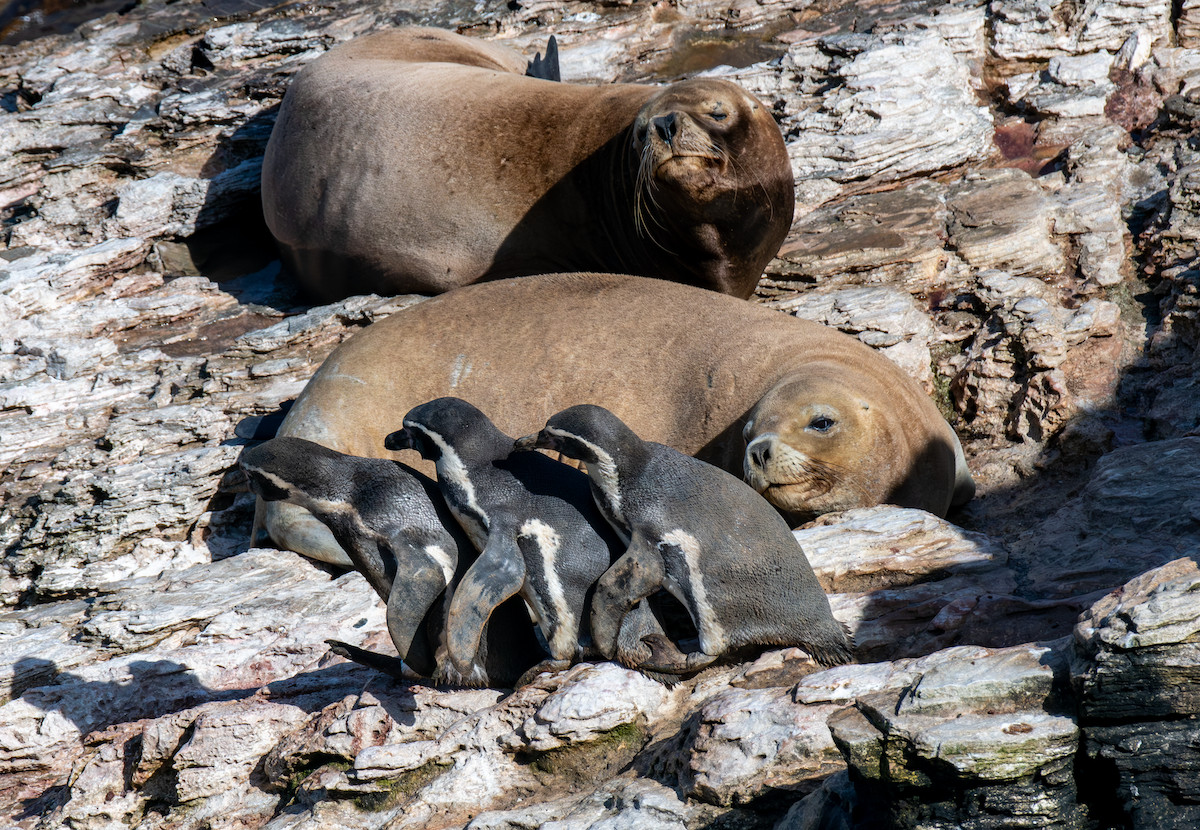
That hour was more exciting than any hour of television, their successful dive into the ocean better than any Hollywood ending.
I could see why so many people love penguins. They exhibit qualities we often see in ourselves: Penguins are social, vocal, occasionally clumsy, and organized around parental units. Penguins, like us, try to mate for life. When they young they practice co-parenting; one penguin stays at home with the chicks while the other forages. They switch roles, a child-rearing tag team, until the chicks leave home.
That’s why this journey into the sea — and back again — is so dramatic and so critical. Should one penguin fail to forage and return in time to relieve their partner, the other parent is forced to abandon the nest, leaving chicks to fend for themselves, often to die, a generation lost.
And it is here, on the desert cliffs of Punta San Juan, that penguins who were once part of the largest Humboldt colony on the planet take a valiant stand against extinction.
Punta San Juan is a small, jagged peninsula along the Peruvian coast, 320 miles south of Lima. I traveled here in May to spend time with penguin researchers at the Punta San Juan research station, which is funded by a consortium of zoos in the United States in collaboration with Cayetano Heredia University in Lima. I spent three days shadowing Kevin Farfán as he and his small team of interns monitored penguins across more than a dozen locations.
Along the way I became vividly aware of the many threats these penguins face.
The Humble Humboldt
Unlike the remote Antarctic penguins of Happy Feet and March of the Penguins, most of the 18 penguin species on this planet live uncomfortably close to humans, along the southern coastlines of South America, South Africa, Australia, and New Zealand.
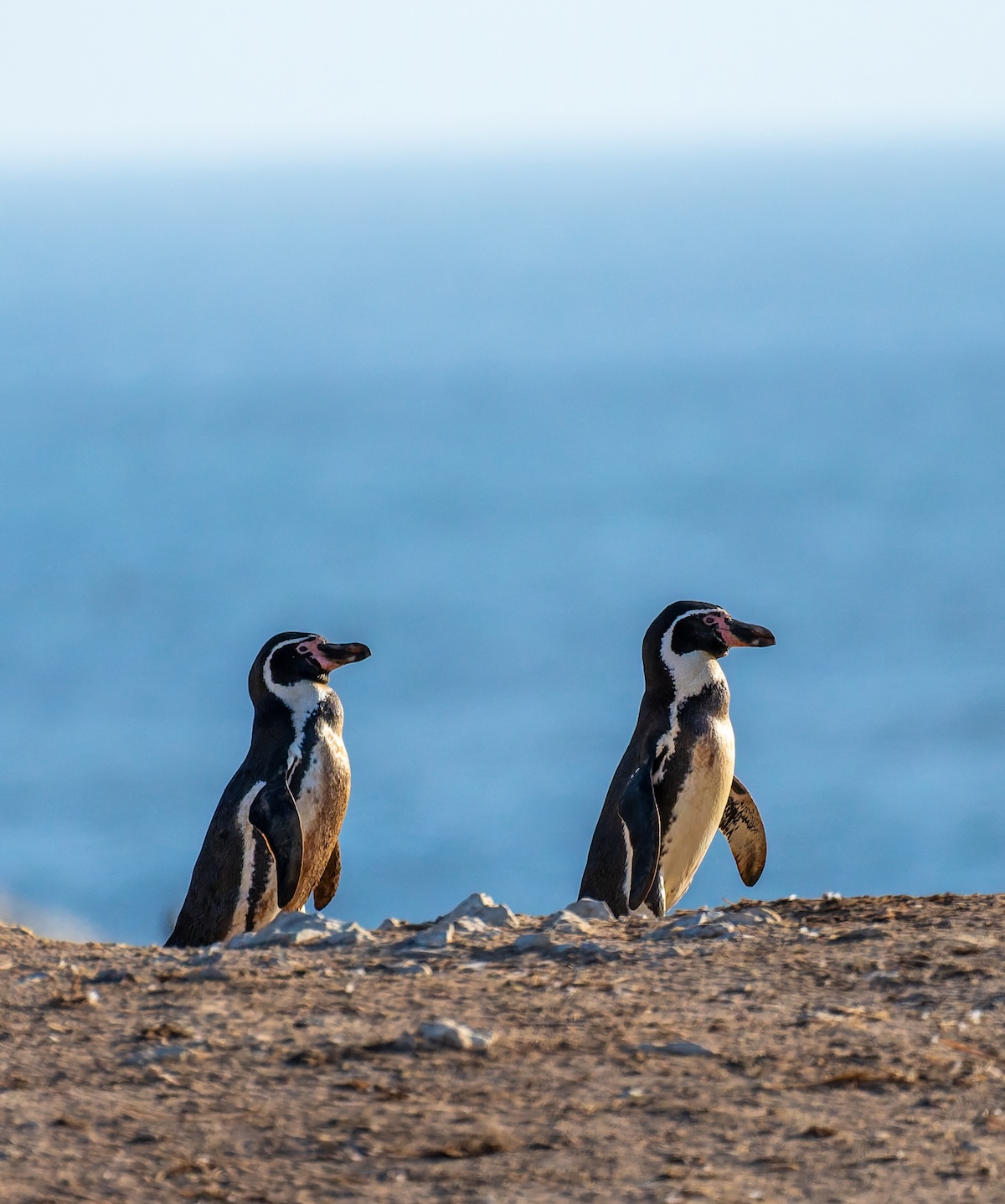
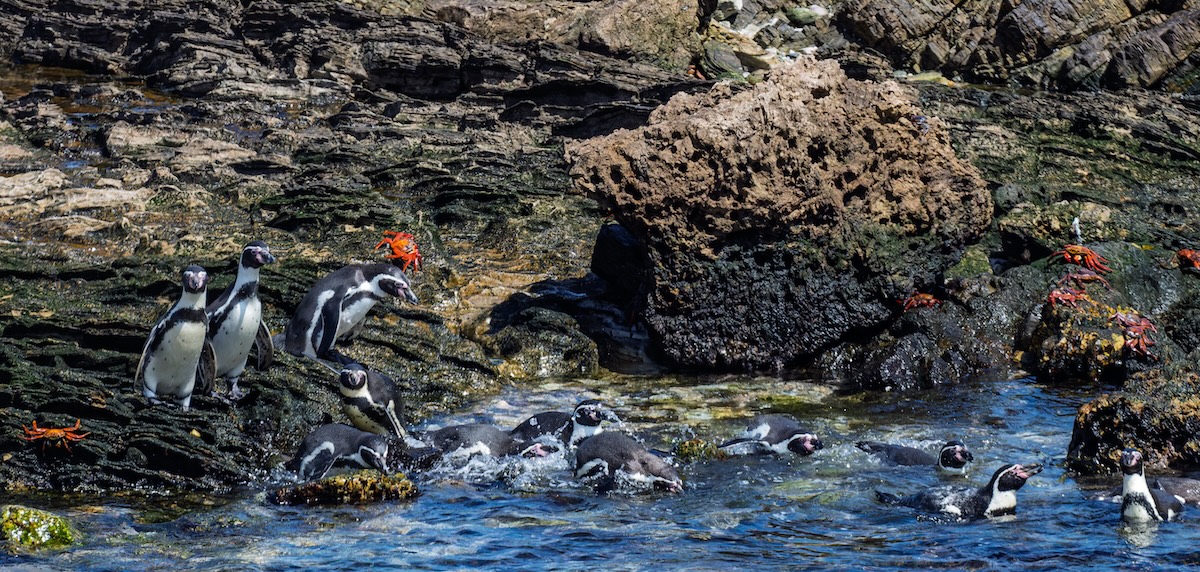
The Humboldt penguin (Spheniscus humboldti) is one of the four “banded” penguins, known for distinctive black patterns that curve across their chests like upside-down horseshoes. The other banded species are African, Galápagos, and Magellanic penguins. Years ago I visited the Patagonian coast of Argentina where a tourist trail winds through a colony of tens of thousands of Magellanic penguins — but among Humboldts, colonies typically number fewer than 500, scattered across 20 or so islands along the coasts of Peru and Chile.
What surprised me most about Humboldts was how skittish they were around humans, as if they were trying to escape prying eyes or just terribly modest. While Magellanics are mostly unfazed by human researchers and paparazzi, Humboldts will make themselves scarce the moment they spot a human, even from a safe distance.
I couldn’t help but wonder if this was less instinct than learned behavior. Humboldts were once killed in great numbers by nearby guano harvesters in need of an easy meal. It was guano — bird excrement — that brought humans to bird colonies for hundreds of years, and this mission continues even today.
Walking on Guano
The Punta San Juan research station sits next to a mile-long, decaying wall that divides the peninsula from the mainland. It was constructed back in the 1940s to keep predators away from the hundreds of thousands of seabirds that blanketed the peninsula, primarily the guanay cormorant, named after the “white gold” the birds left behind in great quantities.
This was not an act of conservation as much a business decision. Bird guano is the one of the planet’s best fertilizers, high in both nitrogen and phosphorous. Peru has harvested guano for export around the world since the 1800s, and it was once the country’s most valuable commodity.
Even today the number of researchers at Punta San Juan is dwarfed by the number of guano harvesters. While harvesting is now strictly regulated — the central plateau where penguins cross from nests to sea remains off limits — AGRORURAL, the government agency that manages harvesting, has pushed to ease restrictions. Since avian flu decimated the seabird population in 2023, there are no more guanay cormorants on the plateau, and pelicans are only just beginning to return. This void has heightened the call for more aggressive harvesting.
While I was there, I spoke with one of the employees of AGRORURAL; when I lamented the loss of the cormorants, she said, “This is good news. Because now we can harvest more guano.”
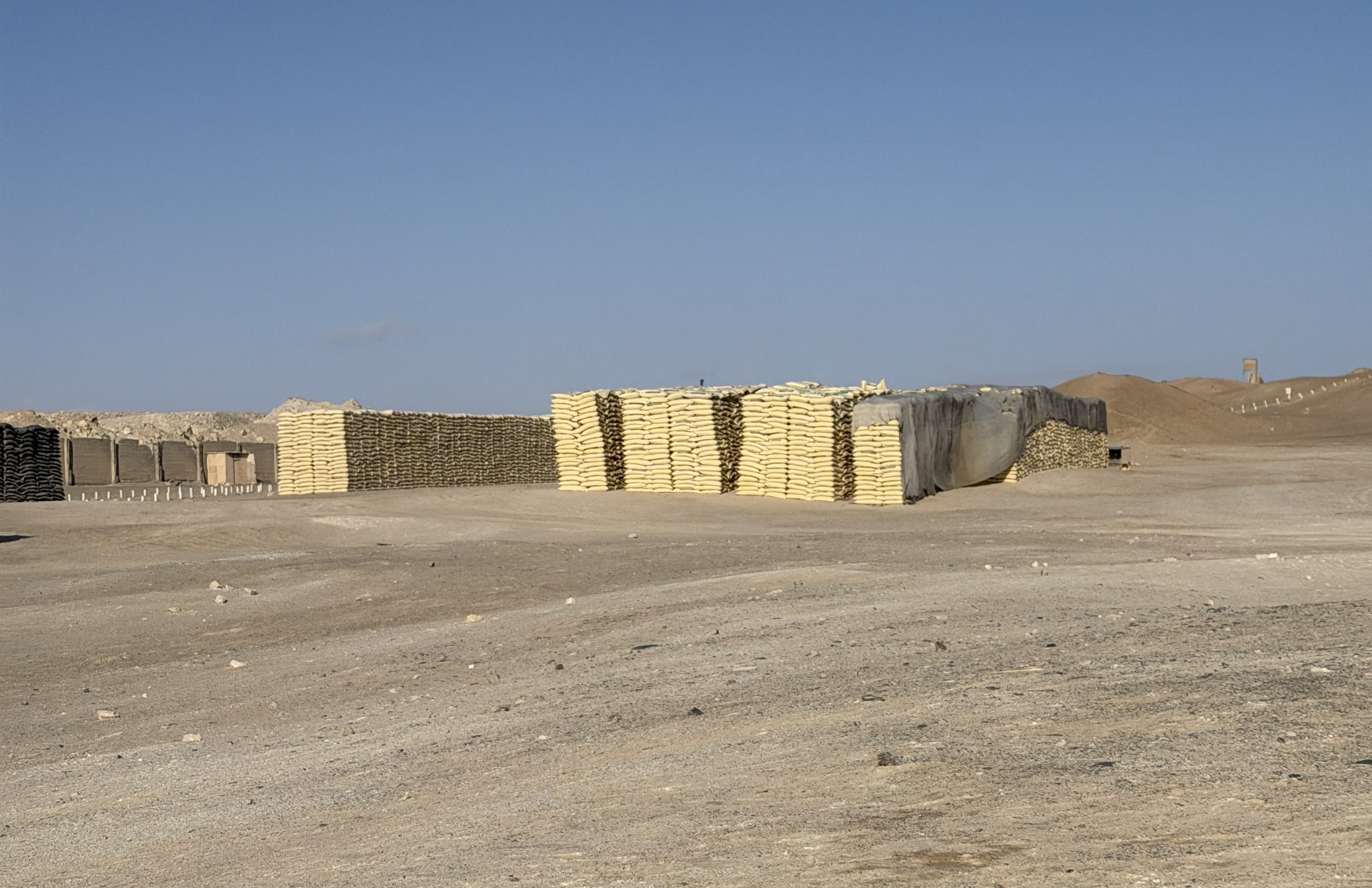
Today most of the guano is used domestically to supply the growing international demand for organic food. While synthetic fertilizers may be far less expensive, it is the demand for organic food in wealthier countries that fuels demand for guano. The organic Peruvian coffee we enjoy — as well as table grapes, asparagus, quinoa, and more — may well have been fertilized by birds that once lived on Punta San Juan.
Counting Penguins
Every morning the penguin researchers are up before dawn to make their separate treks to more than a dozen cliffside overlooks. Each location is given a label, such as S2, for the second beach on the southern side of the peninsula. At each stop they count penguins at every nest (via binoculars or spotting scope) and, while I visited during May’s breeding season, try to count eggs within the nests. When food is abundant, a Humboldt penguin couple will raise two chicks.
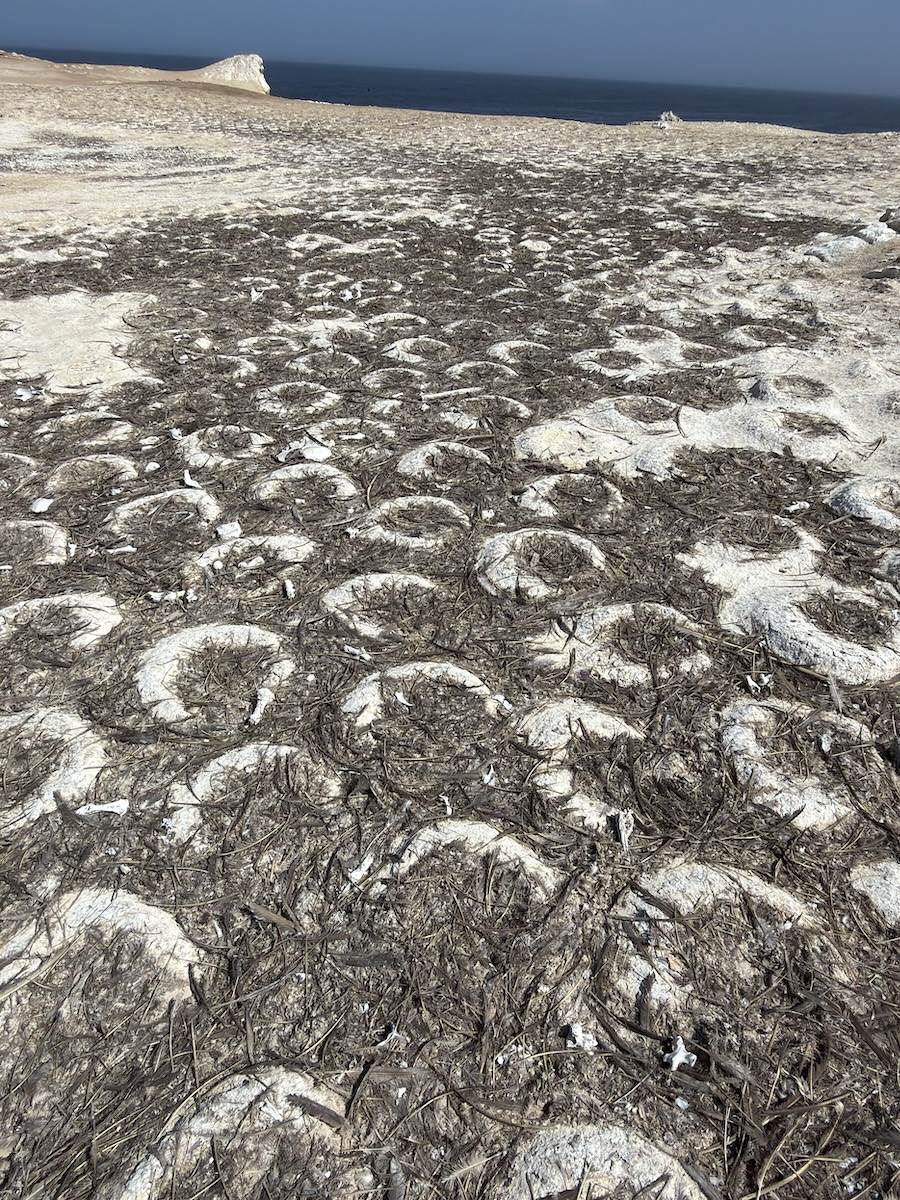
Walking with Kevin across the plateau felt like exploring another planet. First there was the smell, an acrid odor of guano that stung my eyes and clung to my clothing (we were required to change out of our field clothes after every outing). Then there was the landscape, bleached white and mostly flat, the layers of dried guano spongy under my shoes. Strong persistent winds whipped dust into my face. I realized on that first morning why so many of the guano harvesters wore masks.
We stopped at the edge of a cliff, where a small wooden hut functioned as a viewing blind. Inside, intern Sandra Alcantara was doing her morning counts. Using a handmade map for reference, she zoomed in on each nest and noted what she saw on a clipboard: which nests were occupied, whether there were one or two penguins, and any signs of eggs.
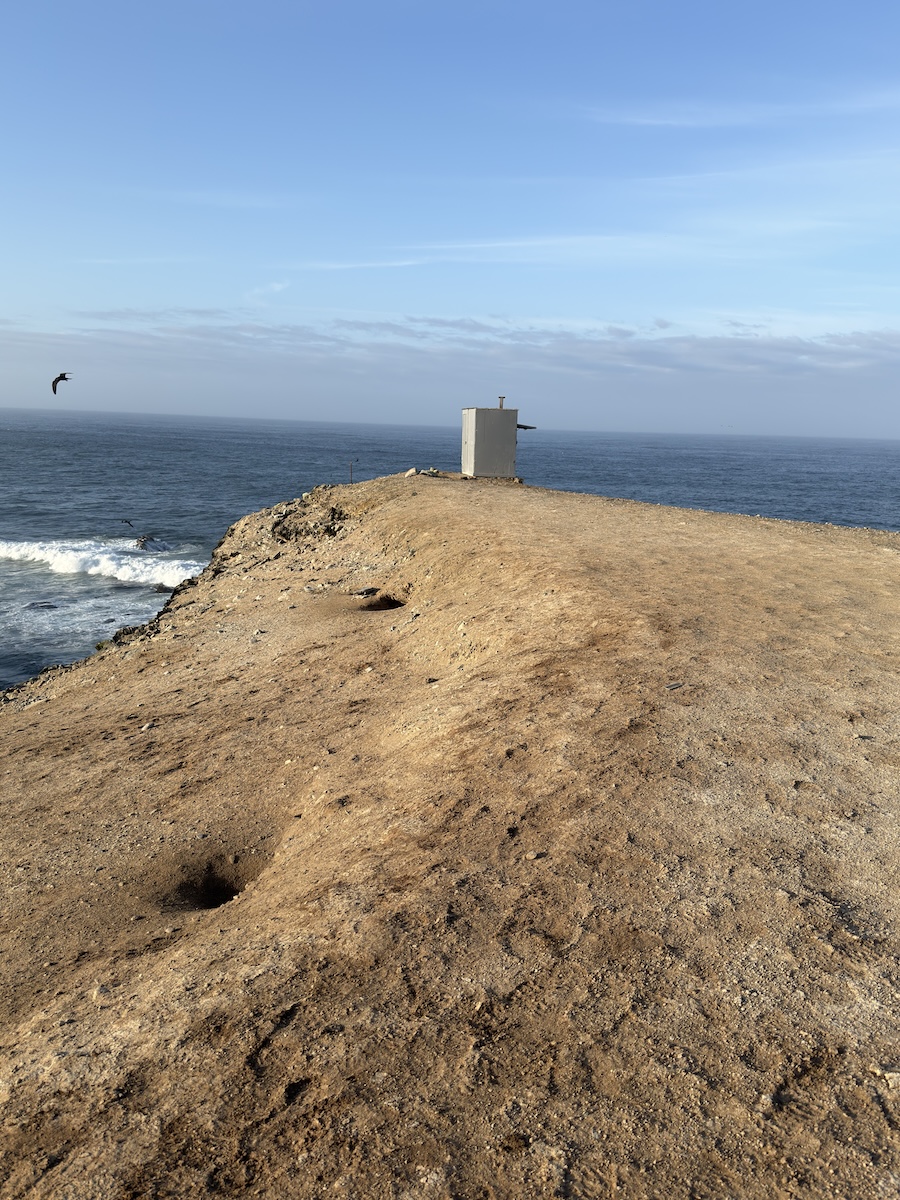
The scene was alive with activity and noise. Down on the beach, hundreds of sea lions were play-fighting, swimming, or snoozing. Above them darted flocks of Inca terns, while pelicans glided above me. Turkey vultures perched along the cliff edges, on alert for any dying animal below.
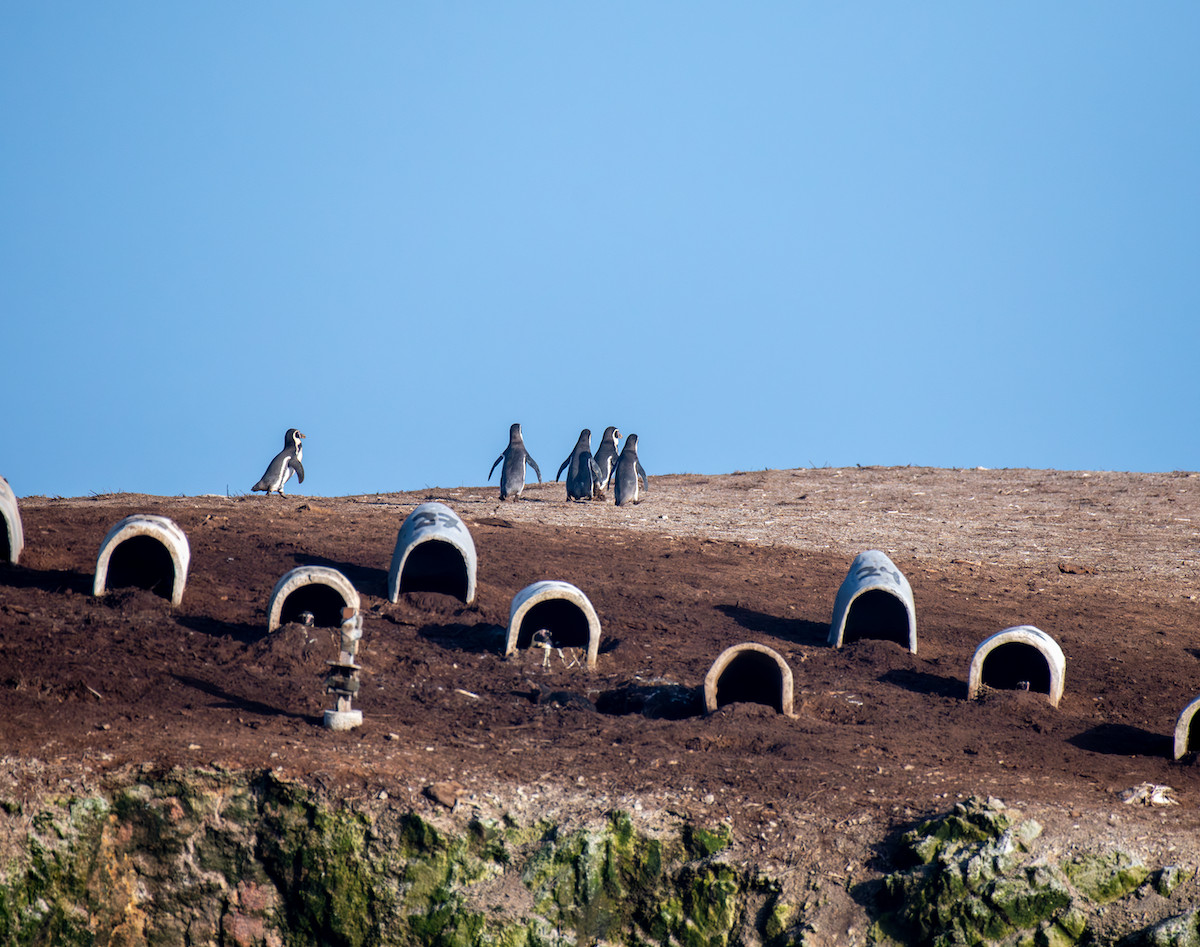
On the opposing cliffs we could see penguin nests carved into the guano. Nearby more than 100 artificial nests created by researchers dotted the horizon like miniature cabanas. These nests were created to make up for the harvested guano, the loss of which prevents the penguins from nesting in the ground.
That morning Kevin brought a drone, which he used to photograph nests from above, the penguins unbothered by the buzzing bird over their heads. He was on the lookout for the numbers on metal tags they had banded onto a small number of birds. Each number unlocks a life story: the age of the penguin, the number of chicks raised, the preferred nesting spot. But not every number returns safely to shore.
While walking back to the station, I was jolted by an explosion in the distance. Kevin pointed to a large expanse of sand-colored mounds beyond the wall, created by the largest open-pit iron ore mine in Peru. Owned by China’s Shougang Group, the mine rattles the peninsula with daily explosions that, on occasion, send the penguins scurrying to sea.
Walking on the bones of pelicans and cormorants, hearing detonations in the distance, felt like living in a dystopian future.
That made it all the more remarkable that penguins continue to nest here. Yet the reason why they have nested here for thousands of years has less to do with the land itself, but what lies just off the coast — the richest marine ecosystem on the planet.
Humboldt Feast (and Famine)
The Humboldt penguin shares its name with the Humboldt current, an ocean phenomenon that runs along the coastline of Chile and Peru, pushing up cold water from the deep. The process, known as upwelling, brings rich nutrients to the surface that feed anchovies and sardines and squid, who in turn provide an easy-to-reach buffet for penguins, seals, and countless other birds. On land the current is invisible except for the ever-present wind that powers it while keeping clouds and rain at bay.
The land may be desert, but the ocean is an oasis of life.
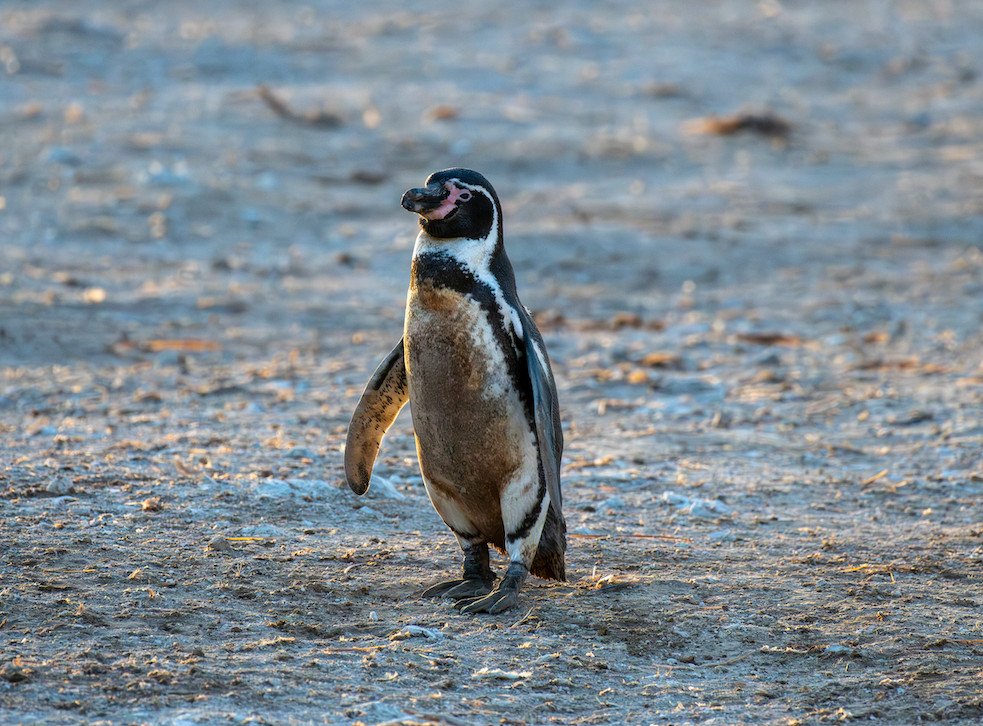
Humboldt penguins are endemic to this area due to its current; however, if there’s no current, there are no penguins.
That’s why periodic El Niño weather events can be so devastating. El Niños effectively shut down the airstream and, with it, the upwelling. Sardines and anchovies are forced to move deeper into the ocean in search of nutrients, and they swim out of reach for the penguins. In 1972, a major El Niño and overfishing crashed both the anchovy and seabird populations to such an extent the government got involved, regulating fishing and making the Humboldt penguins a protected species.
But these changes were too little too late; since then, climate change has resulted in more acute El Niño events, and the fishing industry (legal and illegal) continues to take its toll.
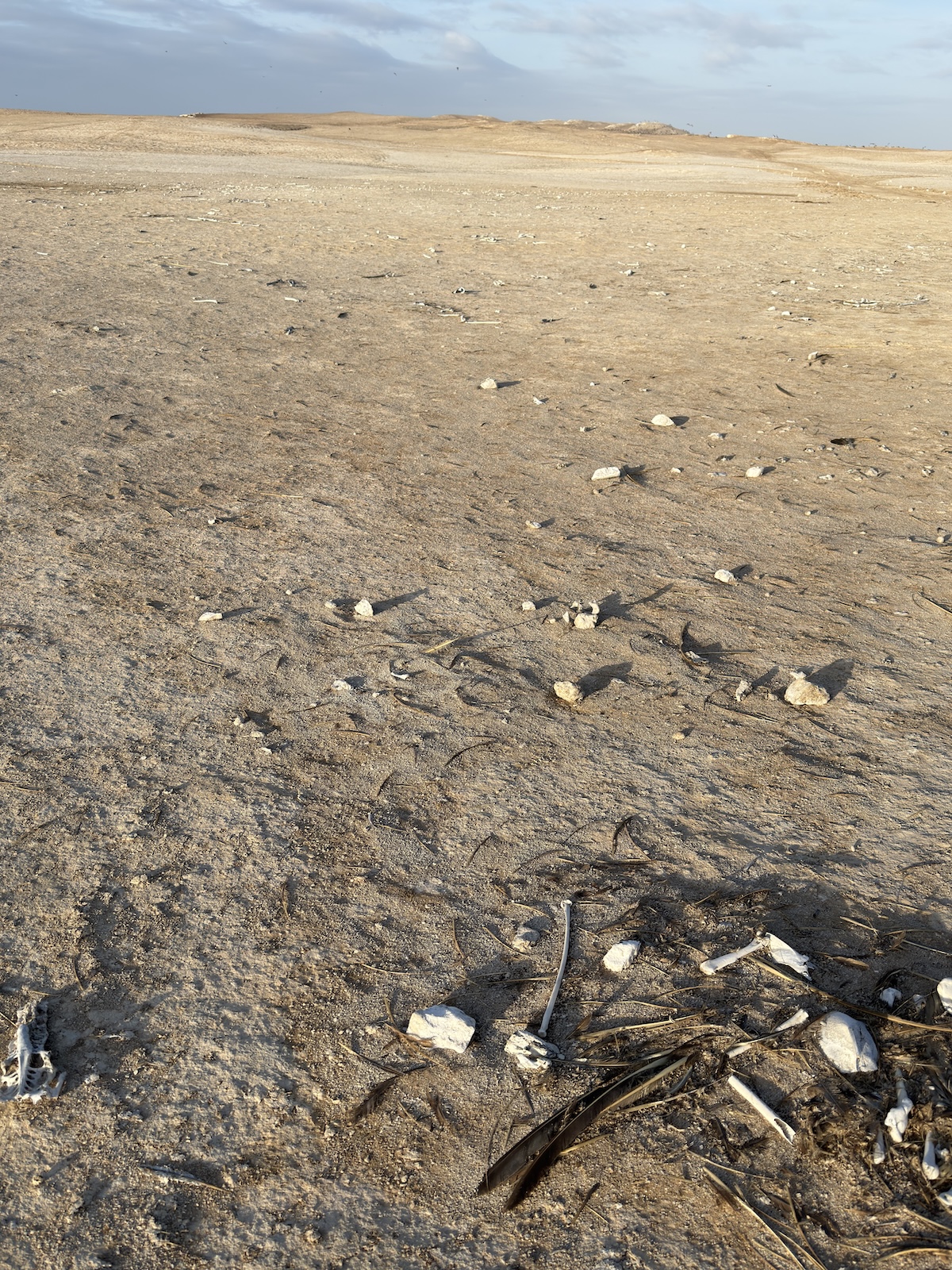
The year 2023 was particularly grim for Punta San Juan. Not only did avian flu wipe out vast numbers of birds but an El Niño left the peninsula devoid of penguins for the first time in recorded history.
Penguins began to return a year later, albeit in diminished numbers. Twenty years ago, Punta San Juan was home to more than 5,000 penguins. When I visited in May just 300 remained.
It’s not just the ups and downs of the food supply that puts penguins in further danger. It’s the humans who compete with them for that same source of food.
Of Fishing Nets and Penguins
In my brief time at Punta San Juan, I noticed several small fishing boats just offshore, despite the protected status of the waters that surround the peninsula.
Yet the larger danger lurks even farther offshore, in unprotected waters, where industrial trawlers cast nets a mile long that sweep up hundreds of tons of anchovies and mackerel — the penguins’ main source of food.
The nets also catch the penguins themselves.
As Kevin’s team knows well, penguins don’t see the borders between protected and unprotected waters; they (like the boats) go where the fish are. When a team of marine researchers surveyed about 800 small-scale fishing operators in Peru and Chile during the 2023 fishing season, they found that more than 3,000 penguins were caught up in nets. And these numbers were conservative, not just because they did not include the larger fishing trawlers, but because many operators intentionally underreport bycatch.
Peru boasts one of the most highly regulated fishing industries on the planet, which allows these fisheries to label their catches as “sustainable” — a label that makes it onto the fish oil products we see on the shelves at Costco and Walmart.
Millions of Americans take fish oil supplements including, including 1 in 5 Americans over the age of 60, according to Harvard Medical School. And more than 20% of the world’s fish oil originates from waters shared by penguins along the coast of Peru. The fisheries based in a port just a mile from Punta San Juan reported 31 dead penguins in January 2023 — a month when penguins are most actively feeding chicks.
The penguins who elude fishing nets don’t have it any easier, as they compete with the trawlers for a declining food supply. Over the past year, approximately 5 million tons of fish, mostly anchovies, were pulled from Peruvian waters, most of it to supply the growing demand for supplements.
Yet human health need not come at the expense of animal health, because we don’t need fish oil to get our allotment of Omega-3s. Alternative sources such as flax seed oil, nuts, and other plant-based foods are even better: Many experts say that fish oil supplements offer dubious health benefits because the process of extracting mercury and other toxins from fish oils renders them minimally effective. The most potent alternative is lab-grown algae, which is free of contaminants and “statistically non-inferior compared to fish oil supplements,” according to recent research published in the International Journal of Molecular Sciences.
A Species on Edge
Two weeks after returning to the United States, I emailed Kevin and learned that the colony of 300 penguins had since fallen in half, primarily due to the acute El Niño now enveloping the region.
A drop such as this naturally leads to the question: How many Humboldt penguins are there across all of Peru and Chile? The International Union for Conservation of Nature estimates 23,800 globally, labeling it a “vulnerable” species; yet given how quickly penguin populations can fluctuate, this label may be more optimistic than realistic.
The truth is we don’t know exactly how many Humboldt penguins there are. There aren’t enough researchers like Kevin and his team working across all the colonies to know with confidence how stable this species is.
Humboldt penguins live on the edge — of a continent and of a species. Every year their entire world can rise or fall based on factors outside of their control — fishing vessels, warmer waters, and humans taking the guano they use for nests.
On my last day there, we visited several cliffside nests, most of them empty. Kevin remained optimistic. He found several occupied nests with eggs, a sign that this colony may rebound yet again.
The researchers themselves remind me of the penguins — tenacious and tireless. Kevin and other researchers can protect these birds on land, he told me, but “We cannot protect them out there.”
We who live half a world away do have the power to protect the penguins out there — through the choices we make. The demand for seafood and fish oil supplements ensures that some penguins will die in nets. Remove the demand and more penguins stand a chance at making it home to their nests. And we can help protect penguins on land by seeking out imported organic food that doesn’t rely on guano.
We all have a role to play in protecting penguins on land and at sea; as with all animals, for penguins, peace begins on our plates.

Previously in The Revelator:
Speak of the Devils: The Animals We Fear the Most Are Fading Away