
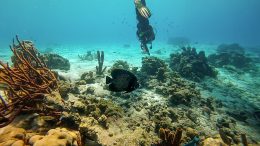
The dive started like any other: hauling tanks out of the truck, helping guests into their gear, and overseeing safety checks. It was a particularly hot day on the Caribbean island of Bonaire, and divemaster Kaitlyn was eager to get into the water to cool off.
The dive would be easy. Salt Pier is one of the most popular dive sites on Bonaire for a reason. Its giant, looming pillars made navigation easy and created an exciting landscape for guests, and the sandbar on the south side is known for spotted eagle rays and green sea turtles. One more easy dive, and then she could take lunch.
But shortly after the dive began, she noticed something in the distance, something lying on the reef. It couldn’t be trash; she was pretty sure she’d just seen bubbles. Could it be a diver who needed help?
She signaled to her group to follow and quickly swam over. There on the reef was a woman. She was lying across the coral, arm outstretched, reaching for an octopus.
“Not again,” Kaitlyn thought, springing into action.

She swam right up to the diver, banging on her tank to draw her attention. But the diver didn’t look up, seemingly intent on getting this octopus into her hand.
Kaitlyn grabbed the diver’s shoulder, signaling that they needed to get off the reef. Adamant to have their “octopus moment,” the diver persisted.
As she told me the story, my friend’s face was flushed with anger. It took several more minutes of persistent interference on Kaitlyn’s behalf before the diver decided to leave the octopus alone. Kaitlyn was furious; not only had the diver invaded this octopus’s space but now the reef beneath her body was left broken beyond repair.
The most frustrating part of all is that we, and other divemasters on the island, were dealing with situations like that every day.
As Kaitlyn told me this story, under a palapa during lunch at the dive shop where we worked, I came to a conclusion: I wish “My Octopus Teacher” had never been filmed.
I recognize that this is a strange thing for a professional SCUBA diver and conservation biologist to say. But ever since the documentary won its Oscar, people across the planet have flocked to the ocean, hoping to form an intimate friendship with an octopus.
Instead of forming that friendship, people end up having unethical wildlife encounters. Sensitive species are disturbed, surrounding habitat is destroyed, and precariously balanced ecosystems are disrupted for the sake of an Instagram post.
A study conducted in the Philippines and Indonesia found that damaging contact with a reef by divers more than doubled when a wildlife encounter occurred during a dive. Whether the contact was intentional or not, these encounters reveal a deeper issue: Even the most well-meaning tourists can be detrimental to the places they visit.
Right now coral tourism is estimated to be worth over U.S. $36 billion annually, despite coral reefs being among the most threatened ecosystems on our planet. Scientists have determined that our oceans have passed a tipping point, meaning they’re quickly becoming unsuitable for sustaining coral life. Warming ocean temperatures, pollution, and ocean acidification are all contributing to the loss of coral reefs, but an overlooked threat is also at play. Increasing research shows that coral-related tourism reduces reef resilience and adds stress to these already vulnerable ecosystems.
A coral reef can take 100,000 years to form, but it only takes a moment for a person to cause irreparable damage to a colony. This is because the coral you see when snorkeling is actually a group of tiny animals called polyps that build their exoskeleton bit by bit using calcium carbonate in the ocean.
Physical contact with the reef is all too common. I’ve witnessed hundreds of instances where divers lost control of their buoyancy or became unaware of their fins snapping chunks of coral. Research has shown that the number of times a diver makes direct contact with a reef is directly correlated with the diver’s SCUBA certification level. The less experienced a diver is, the more likely they are to make physical contact with a reef. Beginner SCUBA divers lack the technical skills needed for precise buoyancy control.
I remember feeling completely out of control underwater when I first started diving. On one of my first dives, I began to float toward the surface, completely unable to figure out how to stop my ascent. When I later began assisting with Professional Association of Diving Instructors (PADI) classes, I had to literally hold down numerous beginner divers struggling with the exact same thing. Good buoyancy is something a diver only acquires through practice. The more you dive, the less likely you are to drag along a reef.
There are, however, instances like the one my coworker experienced with the octopus seeker where contact with the reef is entirely optional. I’ve seen people collect shells and chunks of living coral as souvenirs — all too often, during my time in Bonaire.
In addition to the physical harm, there’s growing scientific evidence that human activity on reefs correlates with the presence of coral diseases. For example, coral disease prevalence on the Great Barrier Reef increased with the presence of an offshore tourist platform that brings hundreds of visitors to the reefs each day. In the Red Sea, physical damage to brain corals by divers increased a coral colony’s susceptibility to predation and disease. Coral growth was found to be five times slower on unprotected reefs with high tourist activity than on protected reefs.
Coral reefs across the Caribbean are currently battling a particularly nasty coral ailment called Stony Coral Tissue Loss Disease, which targets hard corals such as brain and maze and causes irreparable damage to the skeletal tissue of a colony, spreading over an area the size of a sticky note each day. Total mortality of a colony can occur within days or weeks. The disease is highly contagious, and the exact mechanism of transmission is still unknown.
Some evidence supports the claim that humans can spread SCTLD. Research suggests that contaminated gear can bring the disease to other dive sites and even to different countries or regions if it’s not properly disinfected. Dive shops on Bonaire keep clean rinse tanks available and require anyone diving to rinse their gear before and after each dive. When dealing with such a lethal disease, every small act of prevention can make a difference.
Even the most well-intentioned ocean enthusiast can cause harm to these delicate ecosystems. But what can we do about this problem?
Surely stopping all reef tourism is not the answer. As an ocean enthusiast myself, I wouldn’t recommend removing that snorkel tour from your vacation itinerary. Alienating ourselves from the natural world will never bring us closer to saving it.
Change can start with you on your next vacation. There are simple actions each of us can take to help improve the coral tourism industry.
-
- Be picky about your guides. Guides often feel pressured to give their guests exciting, memorable experiences. Look for a local expert who can offer an authentic and respectful experience. Be wary of tour companies that promise close, personal experiences with wildlife. Do not be afraid to tell your guide “no” if they begin doing something you feel is harmful to the environment.
- Build your water skills. Whether it’s a SCUBA course, swim lessons, or just spending time in a local pool, get yourself and fellow travelers in the water before visiting a coral reef. Not only will you have a more enjoyable experience if you feel more comfortable in the water, but you’re also less likely to cause damage to the reef you are visiting.
- Rinse your gear. This is one of the simplest ways you can help protect the coral reefs you visit. If you own SCUBA gear, masks, snorkels, and floaties, be sure to thoroughly clean them before entering the water, especially if they’ve been used elsewhere.
- Hold your travel buddies responsible. Talk to your friends and family (or even your whole tour group, if you’re feeling brave) about the shared responsibility of keeping coral reefs healthy. Encourage those around you to be considerate of all living creatures, including coral reefs.
- Do your research. Get online and explore what regulations your destination may have for coral reef experiences. Most countries have a government agency, such as a national park service, that provides information on best practices and laws. By better understanding expectations, you can make better decisions in the water.
- Most important of all, be respectful. Each time you enter the water, frame yourself not only as a visitor but as a steward. Each small action can have a larger impact. You’d be amazed at just how far that positivity can reach.