
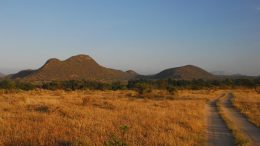
Drive into the Samburu lands of northern Kenya and you’ll see a semiarid region dotted with high-end safari lodges and sprawling community conservancies. The nearby Samburu National Reserve attracts visitors from across the world and garners international recognition. Reports from nongovernmental organizations highlight millions of dollars invested throughout the region in wildlife protection, tourism enterprises, carbon markets, peacebuilding, and community initiatives.
But on these lands, the reality is far more complicated: Despite global acclaim and revenue flows, ordinary pastoralist households often remain cut off from the wealth generated by conservation.
Globally the question of who benefits from conservation has persisted for decades. In northern Kenya that question isn’t theoretical; it’s immediate and unresolved.
Under initiatives such as the Northern Kenya Rangelands Carbon Project, participating community conservancies — locally governed areas of community-owned land set aside for wildlife conservation alongside pastoral livelihoods — have generated substantial revenues though “carbon credits” sales. Since 2013 the project has generated millions of dollars in revenue from carbon credits verified under the Verra standard. In 2022 14 conservancies each reportedly received disbursements of approximately $324,000. According to publicly available project materials, these funds were intended to support rangeland management and community projects in education, water, and health.
Yet these financial flows sit uneasily alongside everyday realities. Many pastoralist households remain economically vulnerable, shaped by recurrent drought, livestock loss, and limited livelihood diversification. Women and children still walk long distances for water. Young people depend on precarious wage labor in landscapes marketed globally as models of sustainability.
This tension points to a deeper structural problem: While conservancies generate significant conservation revenue, the mechanisms through which that value reaches ordinary households remain weak, uneven, and difficult to trace.
Tourism revenues illustrate this imbalance clearly. High-end lodges within conservancies charge between $490 and $2,000 per person per night, while even lower-end lodges charge patrons hundreds of dollars. Entry fees for foreign tourists visiting national reserves range from $70-85 per 24 hours, paid to the county government of Samburu. Conservancies also generate income through concession agreements, lease payments, bed-night fees, and landing fees at airstrips on community land.
Despite these revenue streams, broad-based household benefit remains limited. Research across Kenya’s rangelands indicates that a minority of households earn income from conservancy employment, and those earnings typically constitute a modest share of overall livelihoods. Publicly accessible information on how revenue is distributed is scarce. Without transparency, even educated observers struggle to reconcile marketed benefits with lived realities.
Ownership structures further shape these outcomes. Many lodges operating on community land are owned or managed by foreign hospitality companies, often in partnership with international investors. Communities participate primarily through lease agreements negotiated by conservancy institutions. In exchange they receive fixed payments, employment opportunities, and funding for community projects. However, they rarely hold equity or control over profit distribution.
This pattern mirrors a common dynamic across the Global South: Economic value generated from local land often leaks outward, leaving communities with a small fraction of the wealth produced on their ancestral lands.
And the issue extends beyond conservancies. Samburu National Reserve generates substantial revenue through tourism, yet the funds flow into county government accounts. Decades of conservation investment have not fundamentally altered structural poverty among communities living closest to protected areas.
Despite progressive frameworks meant to protect community land and its people, the promise often remains unrealized. In many conservancies questions around membership remain unresolved, with some community members unclear about their recognition within conservancy structures despite their birthrights on the ancestral land. This uncertainty raises deeper questions about governance, legitimacy, and who truly has a voice in decisions affecting land and community livelihoods, even as formal frameworks exist to safeguard these rights.
Research across rangeland regions in Kenya shows that benefits frequently accrue disproportionately to board members, politically connected actors, and institutional intermediaries. Women, youth, casual laborers, and land-poor households — despite bearing the costs of wildlife predation, grazing restrictions, and mobility constraints — often receive modest or irregular returns. Conservation success is routinely measured in amount of land protected, wildlife populations stabilized, and dollars mobilized, but rarely in terms of household-level well-being, despite global frameworks (such as the Platform on Biodiversity and Ecosystem Services) that advocate for doing exactly that.
Recent developments have brought these tensions into sharper focus. Legal challenges to conservancy governance, the withdrawal of key donors from conservation programs, and the suspension of major carbon credit certification in northern Kenya have exposed underlying concerns around consent, transparency, and benefit sharing. Meetings are held and “benefits announced,” but financial flows from tourism, “carbon markets,” and donors rarely reach households in meaningful ways.
Without transparency, benefit-sharing risks being symbolic rather than substantive.
Equity in benefit distribution is central to conservation legitimacy. Without clearer accountability, conservation risks reproducing extractive dynamics it claims to replace, where land and wildlife generate global value while local communities remain marginalized.
Debates over equity in conservation are not new; for decades scholars and practitioners have questioned whether community-based models genuinely redistribute benefits or just reproduce inequality. Recent global commitments at the IUCN World Conservation Congress 2025 have reinforced this principle, but implementation continues to lag.
Rethinking equity does not mean abandoning community conservancies. In the face of accelerating biodiversity loss, climate change, and constrained public funding, they remain one of the most viable conservation models. But their long-term legitimacy depends on whether they deliver not only ecological outcomes, but fair and measurable social benefits.
A more equitable approach requires concrete shifts. Conservancies and associated partners must adopt transparent, publicly accessible financial reporting that tracks how revenues translate into household-level benefits. Benefit-sharing mechanisms should extend beyond land ownership alone to include broader community members, particularly women and youth. Governance structures must ensure meaningful participation, not just formal representation. Finally, conservation planning must explicitly account for opportunity costs, including restriction on grazing and land use.
Encouragingly, emerging models in parts of Kenya have begun experimenting with more direct household payments, stronger community ownership structures, and transparent financial accountability. While still evolving, these examples demonstrate that alternative approaches are possible.
Pastoralist landscapes have sustained wildlife and cultural systems for generations. Their communities should not remain economically marginalized within conservation’s globally celebrated success stories.
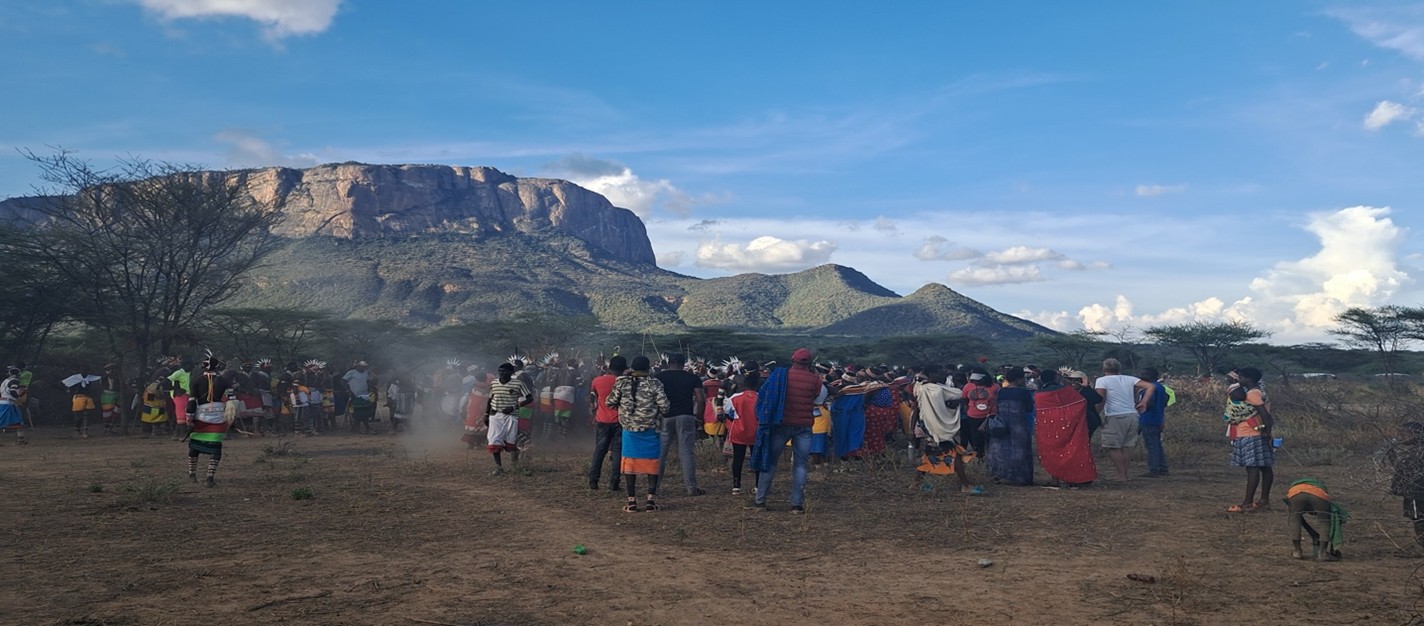
A personal note: I grew up in a village of 25 households and around 150 people, located less than a mile from the main entry to Samburu National Reserve. By now I would expect to see even a single anecdote of someone’s life improving directly from conservancies. I have not. Most of these households still live in insecure housing, struggle to pay for their children’s schools fees, and endure degraded rangelands for their livestock.
If Kenya’s conservancy model is to endure, it must move beyond measuring success in amounts of land protected or dollars generated and confront the more difficult but necessary question: Who truly benefits?