
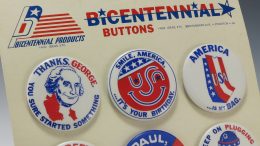
The United States celebrated its 200th anniversary in 1976, and in a lot of ways it felt like a year-long celebration of everything that made our country great.
But there were dark sides to the American Bicentennial, including civil rights struggles, a gas crisis, and (of course) American capitalism.
The over-commercialization of the Bicentennial started long before 1976. As early as September 1974 people were already starting to call it the “Buy-centennial,” with many products designed to part fools from their money with maximum efficiency. Commemorative cars? Check. Special coins? Check. Red, white and blue lawn chairs? Check. Useless parchment certificates proclaiming your patriotism? Check.
Literally, write and mail a check (in those pre-Venmo days) and all of that could have been yours.
The “patriotic” commerce was everywhere. SeaWorld renamed one of its captive killer whales “Yankee Doodle.” Companies marketed toilet seats with eagles underneath the lids. George Washington and other Revolutionary icons were painted onto just about any piece of crap you could imagine.
There were even awards to celebrate the “most tasteless exploitation” of the Bicentennial, with “winners” such as “Paul Revere” ice cream and red-white-and-blue funeral caskets. (I’m sure that last one was some sort of violation of the Flag Code.)
And it wasn’t just these Bicentennial-themed products. Retailers also got into the act, with special “Spirit of 76” sales or “wrapped in the flag” marketing campaigns starting in January and running rampant as Independence Day approached.
What was funny — or, perhaps, completely predictable — is that a lot of the people who set out to exploit the Bicentennial ended up losing their shirts. Come July 5, 1976, whatever Bicentennial-branded products remained on the shelves became instantly worthless. One guy in Utah bought 7,200 Bicentennial chains and medallions; by the end of 1976 he had about 7,120 left that he couldn’t even give away. Our nation’s landfills must all have a layer of red, white and blue crap from around this time for any hardy archeologists with enough intestinal fortitude to dig deep and explore.
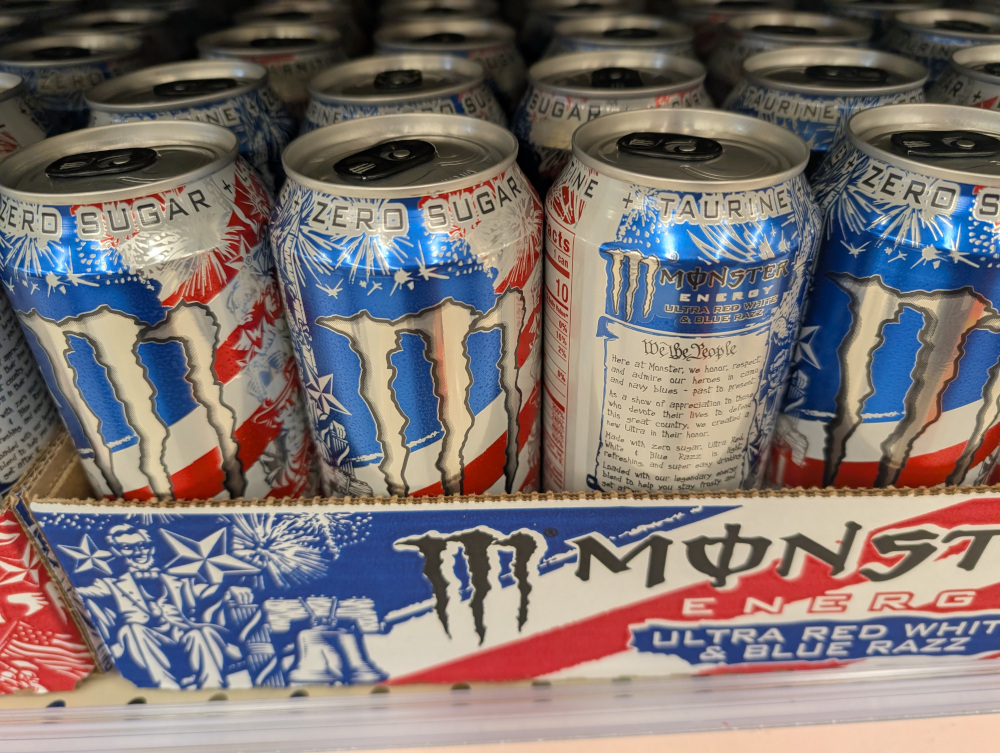
Of course, none of this is much different from the aisles of cheap, imported junk we still see in stores every year come July 4 — especially this year as our nation’s 250th anniversary looms. Right now you can go to any local grocery store, drug store, or big-box retailer to buy poorly made flag T-shirts, flag plastic plates, patriotic disposable forks, cups with bald eagles on the side, and maybe — if you look hard enough — an actual flag or two buried amidst the disposables and Monster energy drinks we use to “celebrate” Independence Day.
And this year has the extra capitalist curse of the Trump presidency looming over it. Our Grifter in Chief and his family have emblazoned his name and ugly mug on a veritable infinite number of products designed to siphon the few remaining dollars from his acolytes’ wallets or bank accounts.
The one saving grace compared to 50 years ago is that a lot of this ephemeral Trump “merch” is print-on-demand, so there won’t be as much unsold excess to end up in a landfill — just hundreds of AI-generated images destined for a computer’s trash bin.
But even ephemera can last a long time, thanks to the wonders of the Internet. I spent a few years researching the Bicentennial (a project from which this essay is adapted), and I’ve uncovered a host of things that still speak to the lessons we haven’t learned over the past 50 years.
So as the Trump-infused Semiquincentennial bears down on us, let’s look back at the capitalist dystopia of the Buy-Centennial through the wonder of 1976 newspaper advertisements. Maybe they can offer a few reminders that unchecked capitalism and waste aren’t patriotic — or worth celebrating.
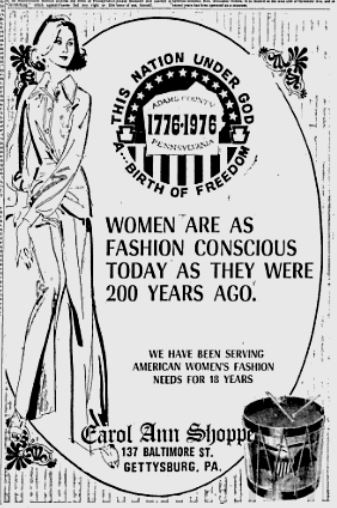
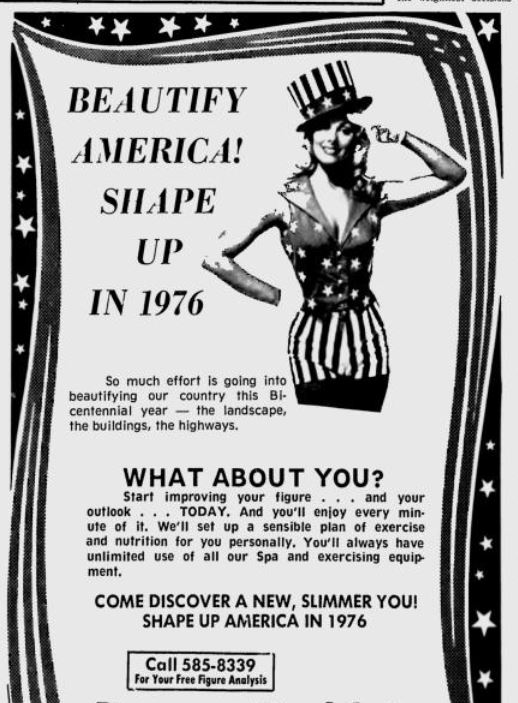
Sexism never went out of style.
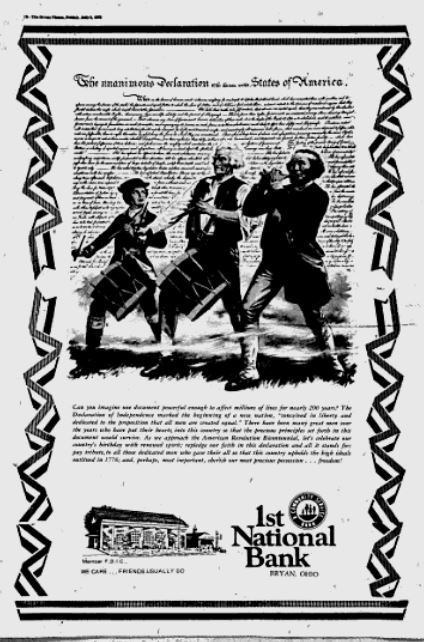
Your constitutional right to banking.
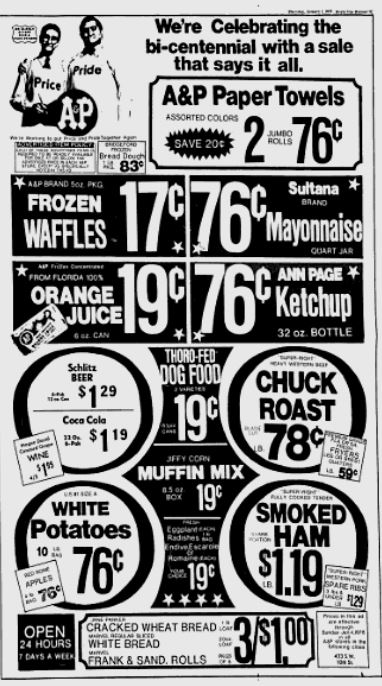
A lot of stories ran prices like this during the Bicentennial.
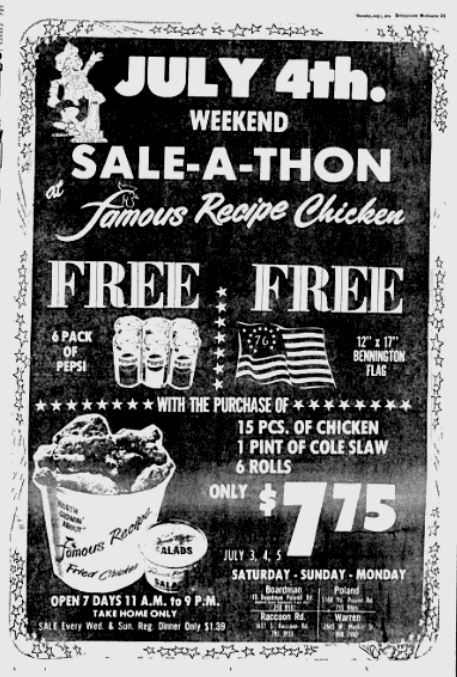
Free flag with a bucket of chicken!
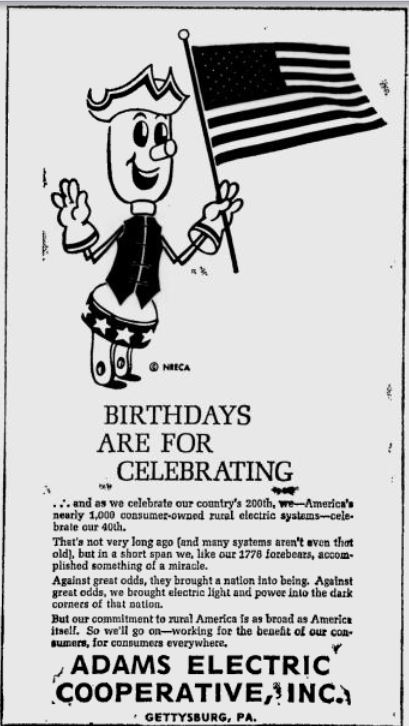
Existing mascots often found themselves wearing tri-corner hats and waving flags.
This clip art of sexy “Uncle” Sam showed up in newspapers all over the country.
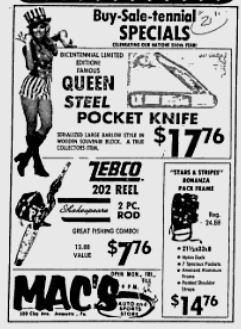
Here’s that same model in an ad for “Buy-sale-tennial Specials.” Sheesh.
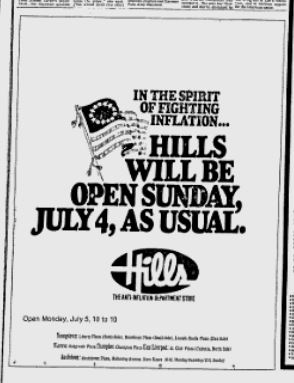
High inflation and labor exploitation … sounds like today.
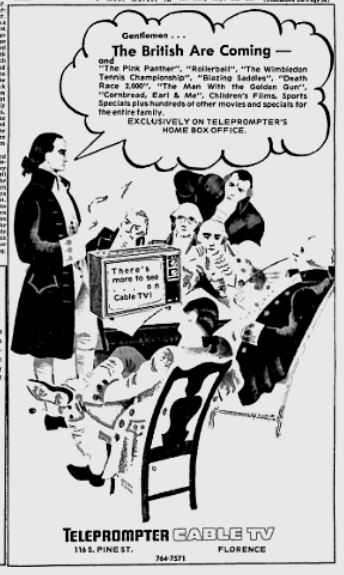
The British are coming … to watch HBO!
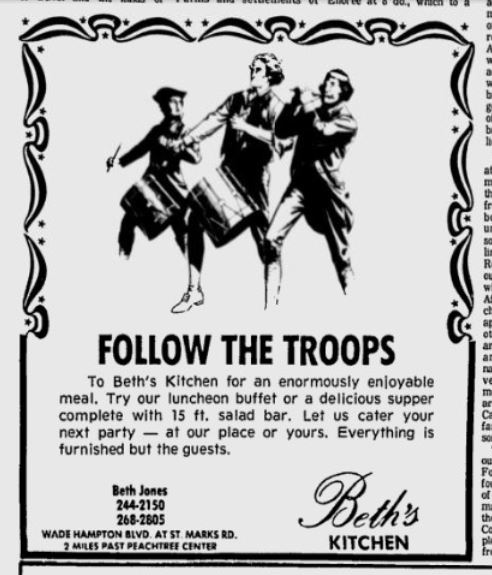
Follow the troops to Beth’s Kitchen. Wow, this one’s offensive.
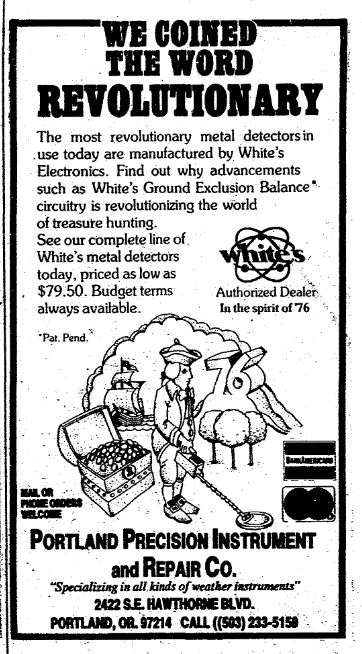
Metal detectors helped in the Revolutionary War?
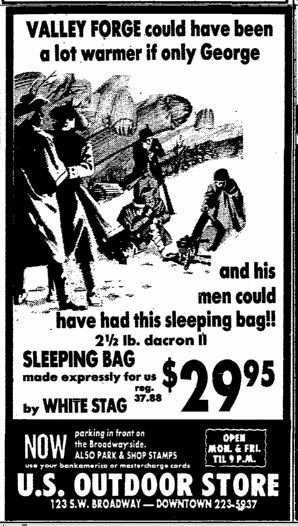
I call this George Washington-washing.
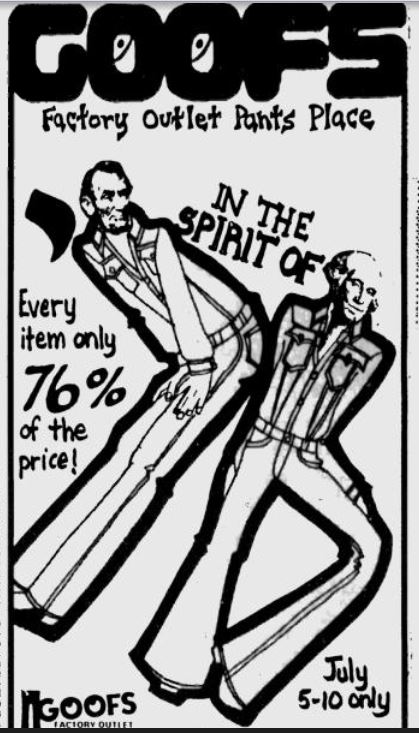
Ouch. That’s some awful artwork. But soooo Seventies.
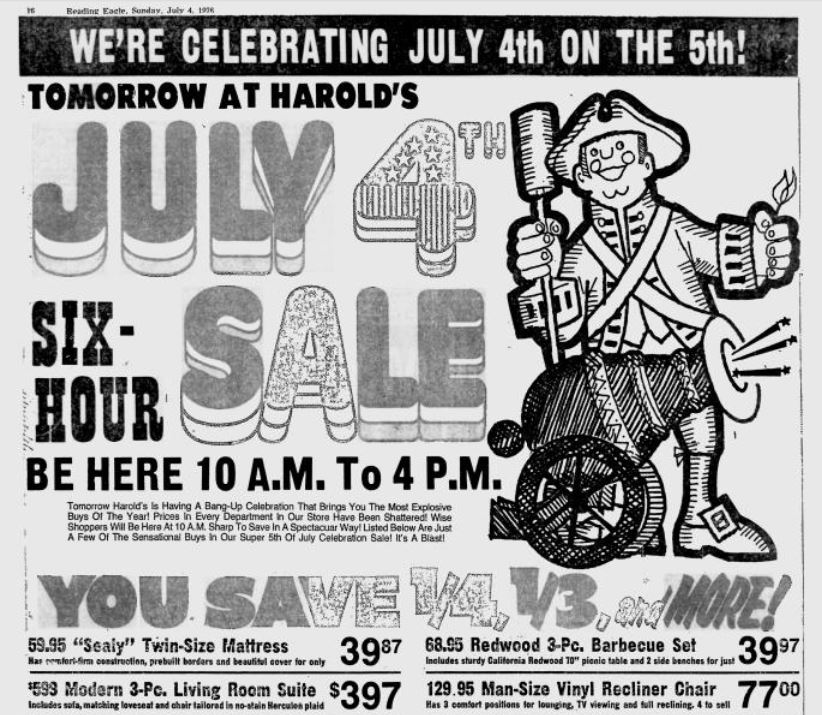
This one is actually kind of cute.
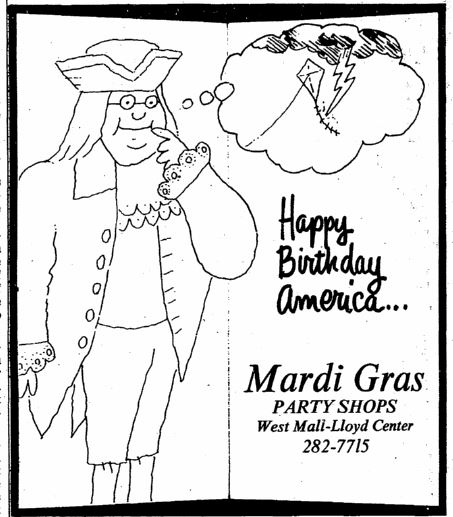
Not the greatest drawing, but…
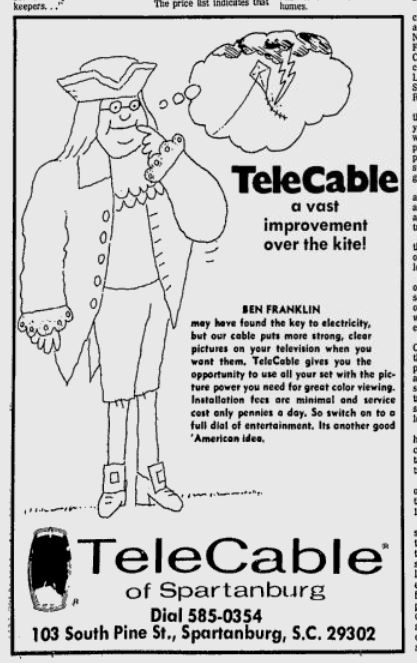
…it sure got used a lot. For a lot of different things. All over the country.
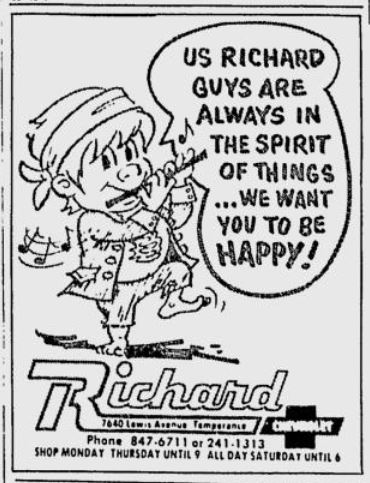
Another mascot embraces the day.
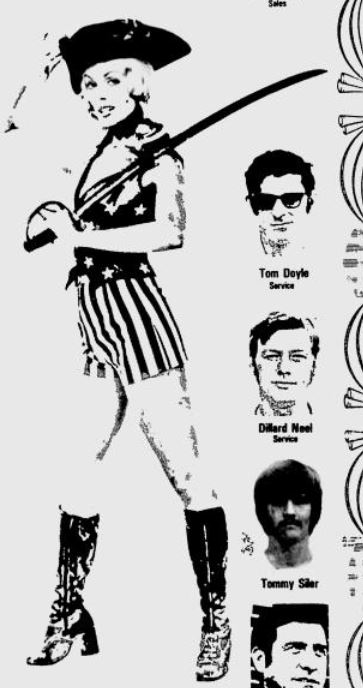
A sexy minuteman — er, maid — sells cars. This photo was used by companies all over the nation. Because sex.
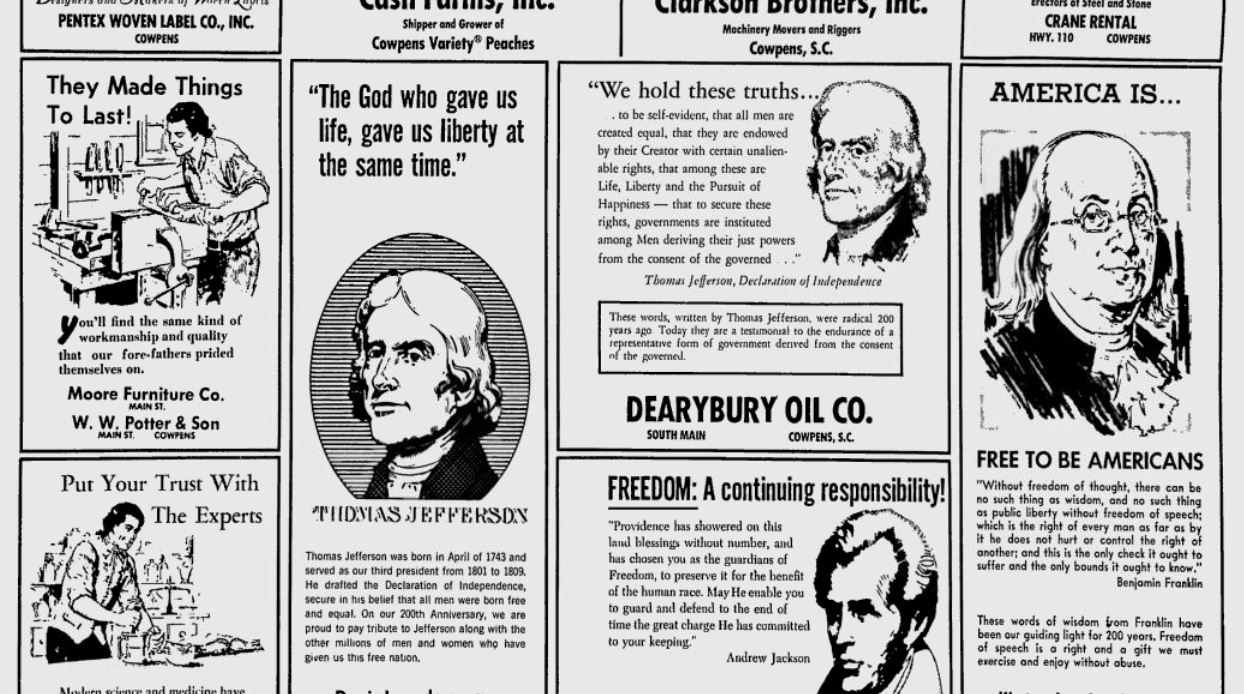
Our founding fathers’ best quotes turned into ads for various companies. This same spread shows up in regional papers all over the country selling different stuff for each town.
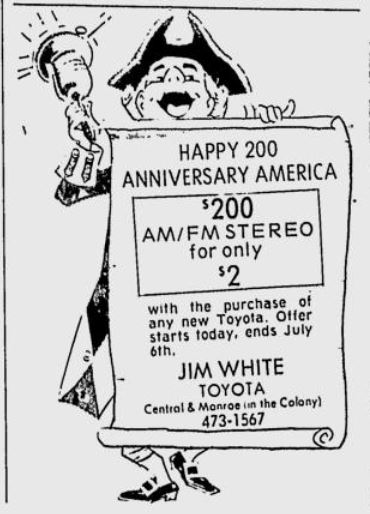
200th birthday, save $200. This clipart of a town crier showed up all over the place. I love the awful paste-up job on the text here.
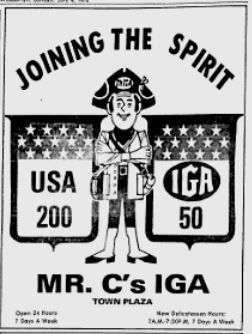
So many companies did this. “America is 200, and we’re 50, so it’s exactly the same thing!”
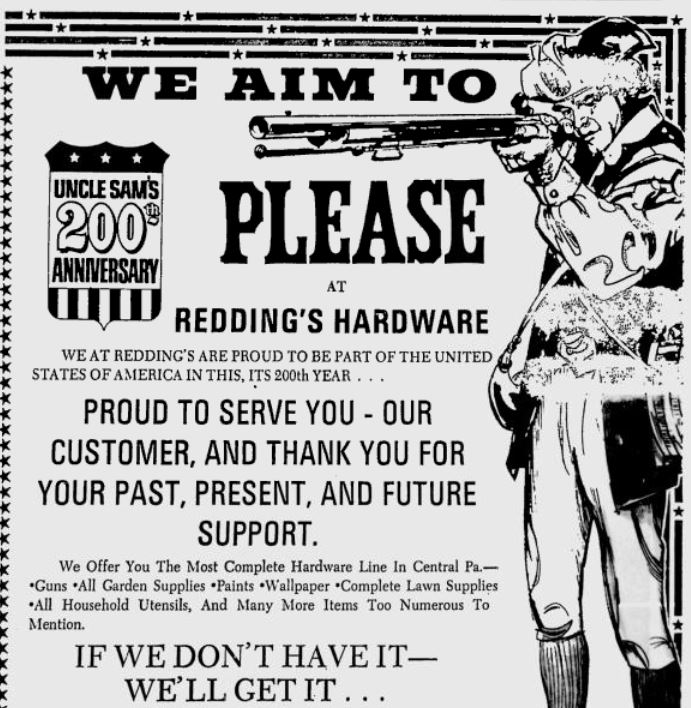
Is pointing a gun at your customers ever a good idea?
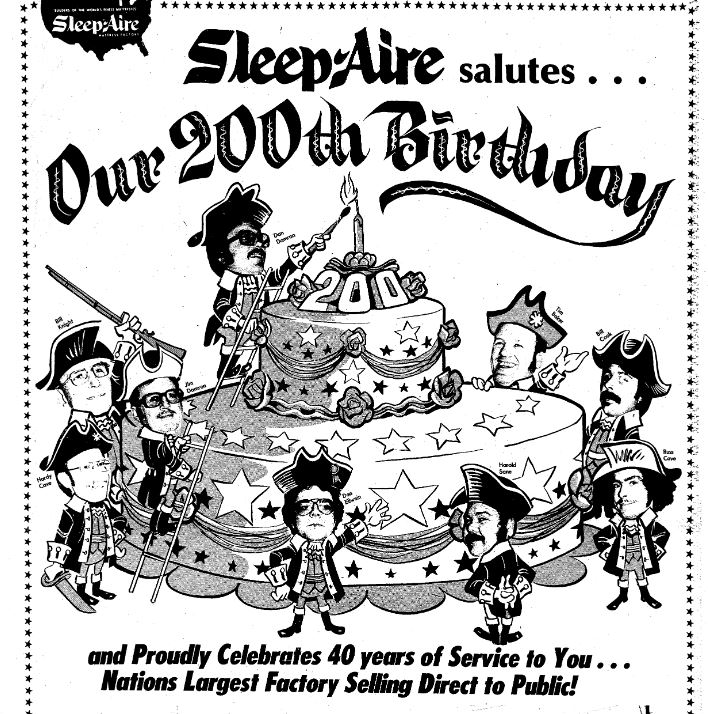
Local businesses often ran photos or caricatures of their salespeople in their ads, but rarely like this.
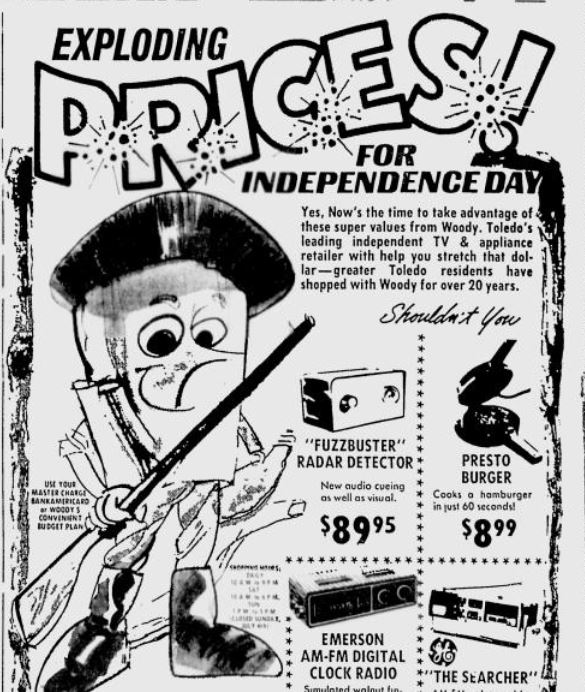
I don’t even know what this mascot is supposed to be.
What are the most egregious Semiquincentennial products you’ve encountered? Let me know at [email protected] — and send photos!

Previously in The Revelator:
Let’s Rename the Day After Thanksgiving ‘Extinction Friday’