This may be true: That we live in a time of cosmic tragedy, when heedless human expansion has pushed many of the planet’s lives beyond bearing. Marvels such as the universe has never seen before — angels’ trumpets and vaquita porpoises — may be past saving. As ecosystems unravel, so do the cultures that depend on them, and the dreadful, dangerous human genius has not yet found the imagination or will to rescue them. I fear that this is so.
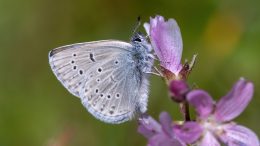
But this also is true: That a flock of butterflies is dancing around purple lupine in our field. They are tiny, the size of a buttercup, but blue. So blue they look like slips of summer sky, taken flight. Fender’s blue butterflies, Icaricia icarioides fenderii. They once seemed to have vanished from the world in the 1930s, when farmers plowed up most of the prairie flowers. Scientists got ready to pronounce them extinct. But then, in 1989, a young U.S. Fish and Wildlife biologist named Jarod Jebousek found a few butterflies on feral land next to our field.

So now, here they are. We see them lapping up nectar from the furry throats of wild iris. We find their eggs on the undersides of Kincaid lupine leaves. Butterflies gather to lick the mud. There are thousands, and it’s all because young acronym-agency scientists teamed up with landowners to save them. I know that this is so.
How is a person supposed to think about that? How do you hold both truths at the same time — the horror and the hope? How can you accept the truth that destroys hope and at the same time hold the hope that may be the only route toward recovery?
Essayist E.B. White made a joke of it: I arise in the morning torn between a desire to save the world and a desire to savor it. This makes it hard to plan the day. But it isn’t funny. It tears me apart. How can you love Earthly lives and know that forces are advancing to destroy them?
This is the question at the center of my life.
I once asked a group of students to pull out their pens and start writing a list of what they loved too much to lose. They started strong. My daughter. Smell of wet oak leaves. Bees in foxgloves. But the students couldn’t keep it up. Salmon coming home. Nettle soup. Sticky cottonwood buds. A student put his head in his hands. Do we have to do this, he asked. Dragonflies.
Yes, we have to do this, I whispered. We have to keep a list. We have to keep them in mind, all the small glories. We can’t let any of them escape our attention. Every day, every moment, we have to name what we love and stand to lose.
Here is what we will have to do: We will love the world with a tender and ferocious love, and we will do what we can to protect and renew it. Both of these. Even if it breaks our hearts. Even if we fail in the end. That’s what love means. That is why we are here.
 That conviction may explain why my husband and I were standing in the center of the field with Kathleen Westly, in that nasty cold fog that afflicts Oregon’s Willamette Valley in December. Up until her retirement this year, Kathleen was the restoration program director of the Marys River Watershed Council, so she was the one coordinating the restoration of habitat for the Fender’s blue butterfly across agencies and landowners.
We were excited because we’d just learned that the Fender’s blue had been promoted from endangered to threatened. A small, even pitiable, victory, maybe, but a significant one, and who wouldn’t be glad for that? Kathleen held a field notebook and pointed with a pencil, as she sketched out how we might change the landscape to make it more welcoming for the butterflies.
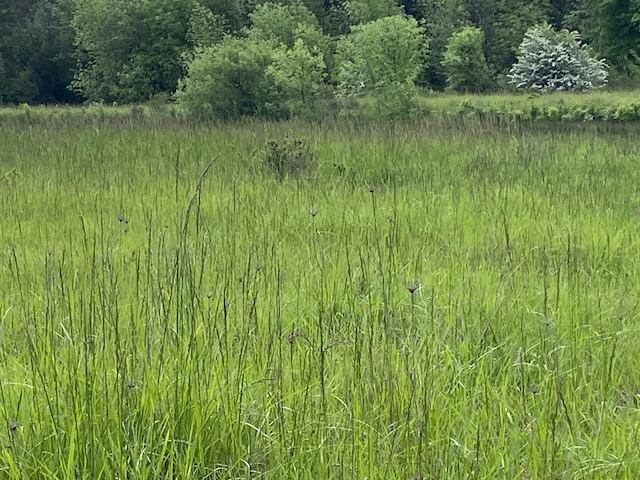
Fender’s blue butterflies are rarely found more than 50 yards from Kincaid’s lupines. They may sip nectar from other plants, especially white or yellow composites, and they may lick roadkill, mud, or animal droppings for their mineral nutrients, but it’s Kincaid’s lupines that provide home and sustenance. Fender’s blues need Kincaid’s lupines, and the lupines need open prairie and sunshine. Only 1% of the Willamette Valley’s prairies are left, and these are small islands in a sea of subdivisions and grass seed farms.
So our first goal for us was to keep our prairie intact and connect it with other prairie land along the Marys River.
Kathleen pointed to a Douglas fir that shaded the oaks at the western boundary of our land. Shall we take this out? And this one? Before long, most of the tall evergreens on that border were goners. Frank and I gulped, but we understood that she wanted to give the butterflies an open, unshaded passage, so they could fly from one lupine patch to another.
We had planted the Doug firs that were in the way of the butterfly movements, and if that was a mistake, then we decided we should make it up.
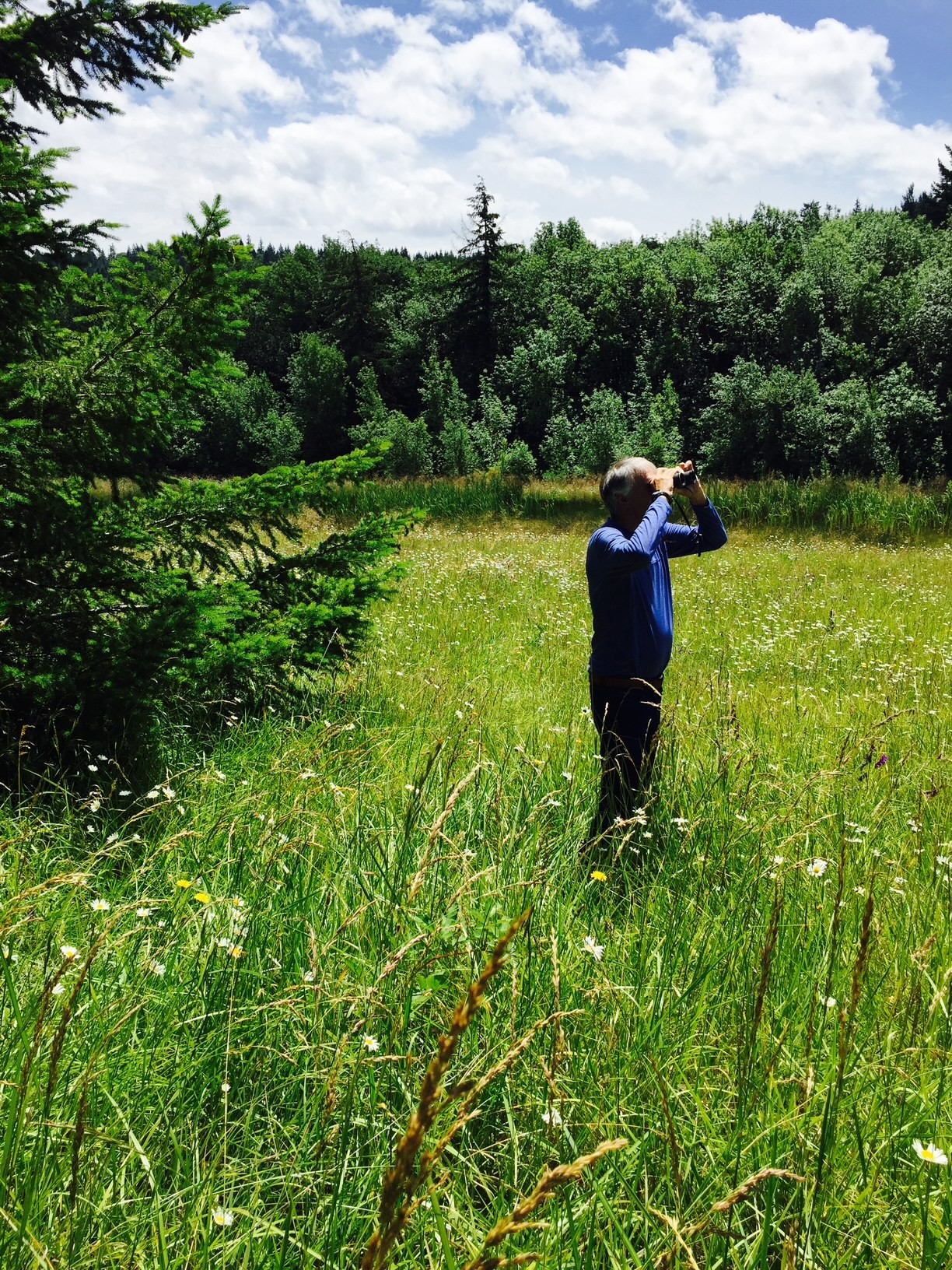
The wonderful surprise of this restoration work was to see so many people of skill and good will come together to create a connected corridor of lupine prairie. Along with the Marys River Watershed Council, credit many agencies and nonprofits, including Benton County, Starker Forests, the Greenbelt Land Trust, the Institute for Applied Ecology, and landowners all along the river. The U.S. Fish and Wildlife Service’s Recovery Program is a big player, providing most of the funds.
The process has been complicated; I do not pretend to understand the acronyms or responsibilities of all the agencies that were involved, but they somehow came together to get the grants written and the work accomplished, from young Indigenous fire crews to those solid-shouldered, old timey ecologists who know everybody and everything. Along with the new butterfly/flower communities, the growing communities of caring people lifted my spirits, at a time when they could use a bit of lifting.
Long tongues that retract and roll up like measuring tapes. Bulgy eyes that see ultraviolet pathways to the heart of a flower. Intestines that collect the remains of the caterpillar that a butterfly used to be. Clear blood. Hairy feet that can taste sweetness. Two eyes that coordinate images from 6,000 lenses. Transparent wings with scales in some of the loveliest patterns and colors on the planet.
These are grand and glorious beings, complicated and clever beyond imagining. I want to ask, who thinks up these extraordinary creatures? But it’s not like that, I know. Butterflies evolved in the Cretaceous period, 100 million years ago. They danced around the feathered crests of dinosaurs, dipped their tongues in the blood of wounded pterosaurs, and drank from newly evolved flowers. Were butterflies beautiful then? Of course they would have been, because there’s survival value in bright beauty that mimics glaring eyes or warns of poison hairs.
The improbable, beautiful complexity of a butterfly seems like a miracle. But that’s the great miracle of biodiversity, isn’t it? That it’s no miracle at all — just nature doing what it does, according to the only rule it knows, which is to live long enough to produce more life.
The storms of the Cretaceous period could not kill the butterflies. The asteroid that set the world on fire did not kill the butterflies. They survived ice age after ice age, flood after flood, drifting continents and fire-breathing volcanoes. Even with their axes and plows, the homesteaders did not kill the butterflies. Tiny things, delicate as paper lanterns, each allotted only one year to live before they blink out, the butterflies on this land survived everything that 100 million years could throw at them.
I don’t know where or when their journey will end. But it will not be here, and it will not be now.

Previously in The Revelator:
Insects Are Disappearing — Here’s How to Help